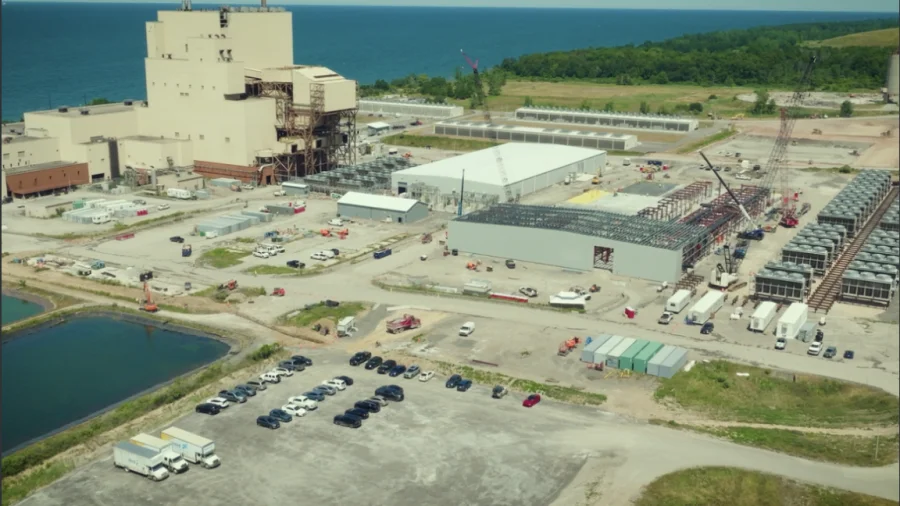

A fire at the Lake Mariner data center in Somerset, New York, has pulled back the curtain on a $3.2 billion artificial intelligence project — and raised serious questions about safety, transparency, and the corporate structure behind it.
The blaze broke out in early June in a building that was still under construction. But what made this fire different was not the flames — it was what firefighters did not know when they walked in.
Firefighters Entered "Kind of Blind" at the AI Data Center
Steve Matisz, chief of the Barker Fire Department, said his crew responded to the scene without critical information. According to Matisz, firefighters found no working alarm, no suppression system, and three dead hydrants on the property.
The situation got worse when they realized they could not identify the chemicals fueling the heavy black smoke. The safety documents — known as safety data sheets — that crews are legally entitled to see had reportedly burned up in the fire itself.
"It's been a difficult situation," Matisz said. He added that his crew went into the building "kind of blind." When asked about the claim that the safety sheets had burned, Matisz said he was not sure what to think.
"It's been a difficult situation." — Steve Matisz, Chief, Barker Fire Department
The Corporate Web Behind the $3.2 Billion Project
The Lake Mariner site sits on what was once a coal mine. Now it is part of a $3.2 billion AI data center buildout — a project that involves layers of companies, contractors, and investors. That complex corporate structure is exactly what made the fire response harder than it should have been.
When a fire department arrives at a building, they rely on clear lines of responsibility. Who owns the site? Who manages construction? Who is responsible for maintaining hydrants and alarm systems? In this case, those answers were not clear — and the consequences showed up in real time.
Firefighters were not just fighting a fire. They were navigating a maze of corporate ownership with no clear point of contact and no working safety infrastructure to guide them.
Safety Gaps That Put First Responders at Risk
The problems at Lake Mariner are not minor oversights. Consider what the crew faced:
- No working fire alarm in a building under construction
- No suppression system to slow the spread of flames
- Three dead hydrants — meaning water supply was compromised
- No access to chemical safety sheets because they burned in the fire
Each of these issues alone is a concern. Together, they created a situation where firefighters had to make life-or-death decisions without basic information.
Matisz's crew pushed forward despite the risks, but the incident exposes a deeper problem: when billion-dollar projects move fast, safety protocols can lag behind.
Our Take: Big Money Cannot Replace Basic Safety
To put it plainly — this fire should never have put firefighters in that position. A $3.2 billion project should have working hydrants, functioning alarms, and safety documents stored somewhere that a fire cannot destroy them.
The corporate web behind the Lake Mariner data center may be legally complex, but safety is not. Every building — especially one housing AI infrastructure with unknown chemicals — must have basic protections in place before workers and first responders set foot inside.
Chief Matisz and his crew did their job under the worst conditions. The companies behind this project now owe them — and the community — clear answers about what went wrong and how they will fix it.
Firefighters should never have to walk into a burning building "kind of blind." That is not a risk they should carry because a corporate structure was too complicated to manage.