

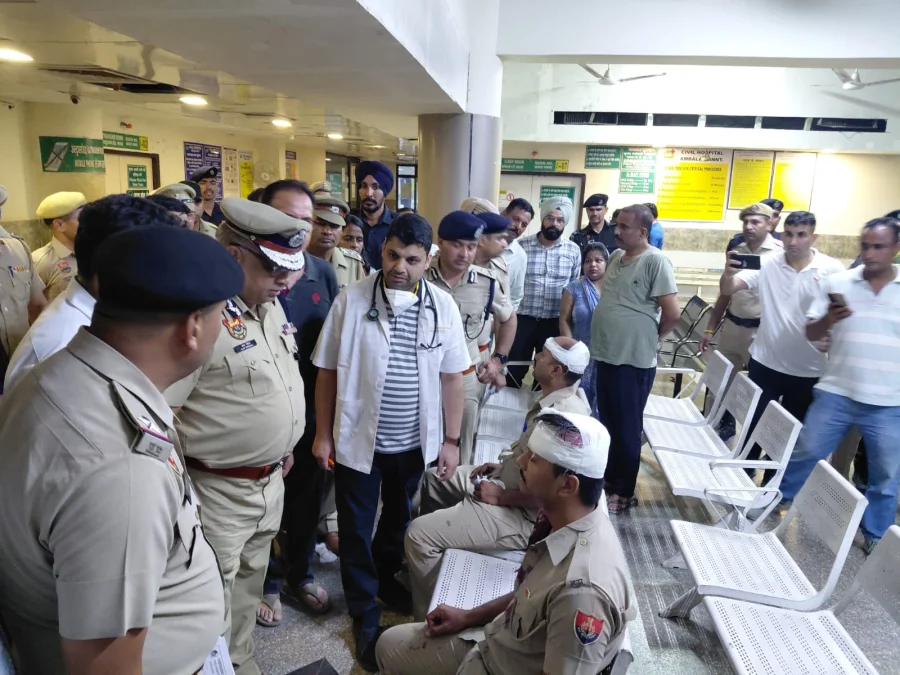

A protest in Ambala Cantonment turned violent on Thursday when police resorted to a cane charge and used tear gas to disperse members and leaders of the Sikh community who had blocked traffic on the Amritsar-Delhi National Highway.
The clash left Haryana Sikh Gurdwara Management Committee (HSGMC) president Jagdish Singh Jhinda injured, along with about six police personnel, including a Deputy Superintendent of Police (DSP), and several protesters. Several vehicles were also damaged during the confrontation.
Police action and highway blockade in Ambala
The protesters blocked the national highway, bringing traffic to a standstill. Police responded with force, using batons and tear gas to clear the area. According to The Tribune, the blockade lasted over six hours before police managed to restore traffic around 9 pm.
DGP Ajay Singhal visited the injured police personnel, according to the report. The confrontation highlights the tense standoff between the Sikh community members and law enforcement in the region.
Why protesters blocked the highway
The protesters were demanding action against Gursimran Singh Mand, national president of the International Anti-Khalistani Terrorist Front. They also sought the release of two youths who had been arrested in connection with an assault case.
According to United News of India, the protest was linked to a clash at Panjokhra Sahib, which led to the highway blockade and the police using tear gas to disperse the crowd.
"The protesters were demanding action against Gursimran Singh Mand, national president of the International Anti-Khalistani Terrorist Front, and sought the release of two youths arrested in connection with an assault case." — The Tribune
Injuries and damage from the cane charge
The cane charge resulted in multiple injuries on both sides. The HSGMC president was among those hurt, along with senior police officers and ordinary protesters. The use of force raises questions about how authorities handled the situation.
- HSGMC president Jagdish Singh Jhinda was injured in the police action
- About six police personnel, including a DSP, sustained injuries
- Several protesters were hurt during the dispersal
- Multiple vehicles were damaged in the confrontation
Our Take: Police force raises serious questions
To put it plainly, this incident shows how quickly a protest can turn violent when both sides refuse to back down. The police had a duty to clear a national highway, but injuring the head of a religious committee and using batons on protesters is a heavy-handed approach.
In our view, the authorities should have engaged in dialogue before resorting to force. The fact that the blockade lasted six hours suggests there was time to negotiate. Instead, the cane charge created more tension and left people injured on both sides.
The demand for action against Gursimran Singh Mand and the release of two arrested youths are serious matters that need proper legal handling. Using force to silence protesters does not address the underlying issues — it only escalates them. The DGP meeting injured officers shows the police are concerned, but the bigger question is whether this incident will lead to a review of how such protests are managed in the future.