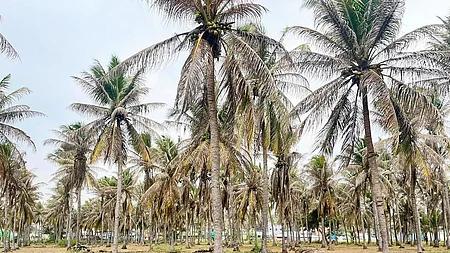

A rapidly spreading infestation of the black-headed caterpillar has emerged as a serious threat to coconut plantations in parts of Tamil Nadu's Coimbatore district. Farmers in the northern parts of Sulur taluk are now seeking urgent intervention from the horticulture department as the pest continues to damage their coconut palms.
Black-headed caterpillar outbreak in Sulur taluk
The outbreak was first detected in Mopperipalayam, where farmers reported that a large number of trees have already been affected. According to The New Indian Express, farmers from Mopperipalayam areas reported that the pest infestation has become extremely severe, with many trees showing heavily damaged fronds.
Growers fear the pest is now advancing to neighbouring villages, including Kaduvettipalayam, Kittampalayam and Paduvampalli. The spread is being aided by prevailing northerly and easterly winds, which carry the caterpillars to new areas.
Farmers seek urgent government help
The black-headed caterpillar (Opisina arenosella) is one of the most destructive pests affecting coconut trees. As the infestation spreads steadily, coconut farmers in the region are grappling with a severe outbreak that threatens their livelihoods.
According to The Hans India, the black-headed caterpillar outbreak is damaging coconut plantations in Coimbatore, prompting farmers to seek urgent government intervention. The situation has become critical as the pest continues to damage coconut palms across multiple villages.
Our Take: Immediate action needed to save coconut farms
This infestation in Coimbatore's Sulur taluk is a clear warning that pest outbreaks can escalate quickly when weather conditions favour their spread. The fact that farmers are directly appealing to the horticulture department shows that local measures may not be enough.
In our view, the horticulture department must act fast. Delays could allow the black-headed caterpillar to spread further, affecting more trees and more families who depend on coconut farming for their income. A coordinated response — including pest control measures, awareness campaigns, and support for affected farmers — is essential to contain this outbreak before it causes lasting damage to the region's coconut plantations.