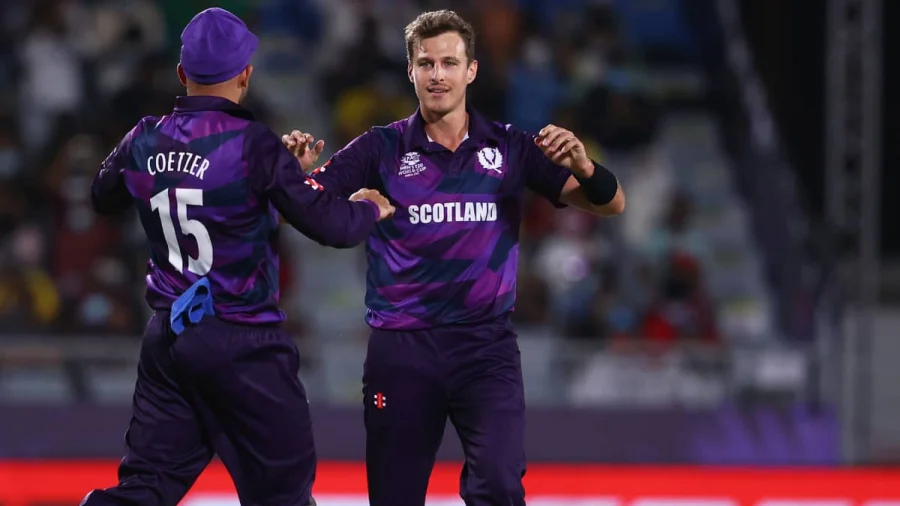

Scotland fast bowler Brad Wheal has announced his retirement from professional cricket at the age of 30. The right-arm pacer said repeated injuries had made it increasingly difficult for him to meet the physical demands of fast bowling.
Wheal played four T20 World Cups for Scotland and spent a decade in international cricket. He also played his club cricket for Hampshire. His decision was confirmed in a statement released by Cricket Scotland.
Why Brad Wheal Retired: Back Stress Fractures and Knee Surgery
The main reason behind Wheal's early retirement is his injury record. He suffered four stress fractures in his back during his career. He also recently underwent knee surgery.
In his statement, Wheal explained that his body could no longer withstand the demands of professional cricket. He said he had loved his time at Hampshire and representing Scotland as a professional cricketer, but recurring injuries had forced his hand.
"I've loved my time at Hampshire and representing Scotland as a professional cricketer, but unfortunately, recurring injuries..." — Brad Wheal, in his retirement statement released by Cricket Scotland
What Brad Wheal Achieved in His Career
Wheal's career was built on pace, and he carried Scotland's bowling attack across multiple global tournaments. His record includes:
- Four T20 World Cup appearances for Scotland — a rare achievement for an associate nation player
- A decade-long international career representing Scotland
- A long stint at Hampshire in English county cricket
- Four separate stress fractures in his back, showing how much wear his body took
Fast bowling puts extreme load on the back and knees. Stress fractures in the back are a common and serious injury for pace bowlers, and repeated fractures often end careers early. Wheal's case follows that pattern — four such fractures, plus knee surgery, left him with little room to keep going.
Our Take: A Career Cut Short by the Body, Not the Mind
Retiring at 30 is not a choice any fast bowler makes lightly. In our view, Wheal's story is a reminder of how brutal pace bowling is on the human body. Four stress fractures in the back is not bad luck — it is the physical cost of bowling fast for a decade.
To put it plainly, Scotland loses an experienced campaigner who turned up at four T20 World Cups. For a team that depends on its senior players in global events, that experience is hard to replace. Wheal did not retire because he lost form or desire. He retired because his body stopped cooperating. That deserves respect, not sympathy.
For readers, the takeaway is simple: when a 30-year-old fast bowler walks away, it is worth asking how much cricket schedules demand from players' bodies. Wheal's exit is one more data point in that larger question.