
Summary
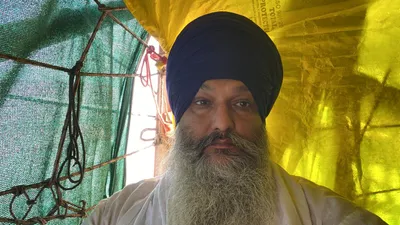
Gurjeet Singh Khalsa, a 43-year-old activist, has officially agreed to end his long-standing protest atop a 400-foot telecom tower in Samana, Punjab. He first climbed the tower in October 2024 to demand a stricter law against the sacrilege of holy books. After 18 months of living in extreme conditions, he decided to come down following the approval of a new state law. This decision marks the end of a high-profile protest that drew significant attention across the region.
Main Impact
The primary reason for the end of this protest is the signing of the Jaagat Jot Sri Guru Granth Sahib Satkar (Amendment) Bill, 2026. Punjab Governor Gulab Chand Kataria gave his official approval to the bill, which turns the proposed changes into law. This new legislation introduces much tougher punishments for anyone found guilty of disrespecting religious scriptures. For Khalsa and his supporters, this is a major victory that they believe will help prevent future incidents of sacrilege in the state.
Key Details
What Happened
Gurjeet Singh Khalsa is a farmer and dairy owner from Kheri Nagaiyan village in Patiala. In late 2024, he felt that existing laws were not strong enough to stop people from insulting religious texts. To show his commitment, he climbed a massive telecom tower and refused to come down until the government took action. He lived in a small, makeshift shelter made of tarpaulin sheets at the very top of the structure. Despite many attempts by government officials to convince him to leave, he stayed on the tower for a year and a half, facing heat, cold, and rain.
Important Numbers and Facts
The protest lasted for a total of 18 months. The tower Khalsa climbed stands 400 feet tall. During his time there, he relied on two caretakers who brought him food and water only once a day. Because he had no room to move or exercise, his health often suffered, with his blood pressure and sugar levels becoming unstable. His supporters also showed their dedication by starting a foot march on January 1 and beginning a continuous sit-in protest in Samana in March to keep the pressure on the government.
Background and Context
Sacrilege, or the act of showing disrespect to something considered holy, is a very sensitive and serious issue in Punjab. Over the last few years, several incidents involving the disrespect of the Guru Granth Sahib have caused deep pain and anger within the Sikh community. Many people felt that the legal system was too slow or too weak to punish those responsible. Gurjeet Singh Khalsa decided to take a drastic step to ensure the government created a specific and powerful law to address these crimes. He left his business and his family in the care of his brother to dedicate himself to this cause.
Public or Industry Reaction
The Shiromani Gurdwara Parbandhak Committee (SGPC), which is a major religious organization, has welcomed the new law. The president of the SGPC, Harjinder Singh Dhami, stated that while the law is a good step, the government must now show the will to actually use it. He pointed out that in the past, many people accused of these crimes managed to avoid punishment. The SGPC is also calling for the government to look deeper into these incidents to find the people who plan and fund them, rather than just catching the individuals who carry out the acts.
What This Means Going Forward
The protest will officially conclude with a religious ceremony called an akhand path, which is a continuous reading of holy scriptures. This ceremony will take place near the tower at Baba Banda Singh Bahadur Chowk. Khalsa has stated that he will not come down in a hurry but will wait for the final day of the ceremony to descend in front of the people who supported him. Once he is down, the focus will shift to how the Punjab Police use the new law to investigate and prosecute cases of sacrilege. The government now faces the task of proving that the new legal measures can effectively stop these crimes.
Final Take
The end of Gurjeet Singh Khalsa’s 18-month protest is a significant moment for Punjab. It shows the power of individual determination in bringing about legal change. While the new law is now in place, the real test will be its implementation. The community will be watching closely to see if these tougher rules lead to more justice and a decrease in religious crimes across the state.
Frequently Asked Questions
Why did Gurjeet Singh Khalsa climb the tower?
He climbed the tower to demand a stricter law against the sacrilege of religious scriptures, specifically the Guru Granth Sahib, after several incidents occurred in Punjab.
How long did the protest last?
The protest lasted for 18 months, starting in October 2024 and ending in April 2026 after the new law was signed by the Governor.
What is the new law that was passed?
The law is the Jaagat Jot Sri Guru Granth Sahib Satkar (Amendment) Bill, 2026. It provides for much harsher punishments for those who commit acts of sacrilege against holy books.