

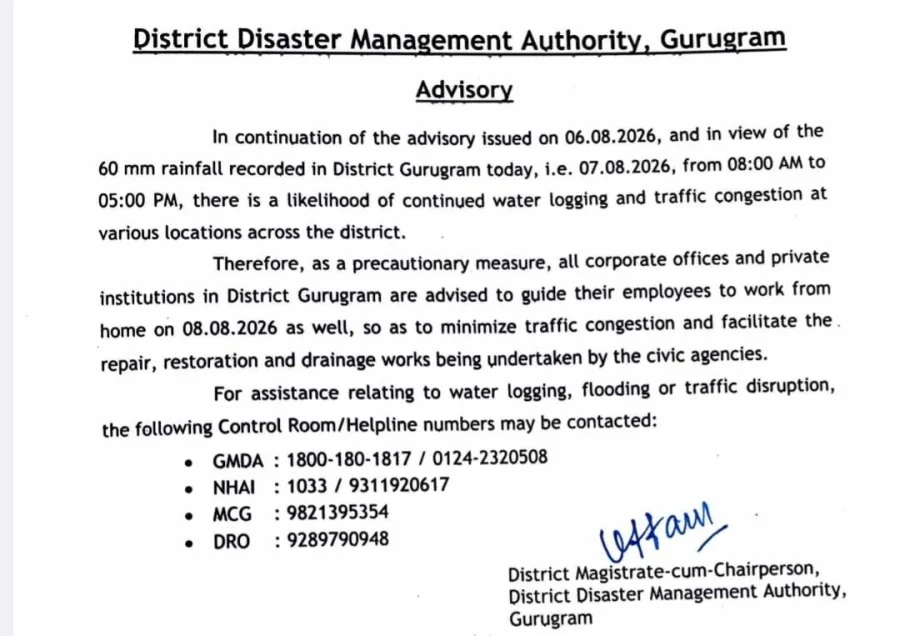

Gurugram woke up under a fresh India Meteorological Department (IMD) red alert on Saturday, even as the city braces for its third consecutive work-from-home advisory. A brief lull in rain offered little respite after three days of monsoon-related waterlogging and traffic disruptions.
IMD Red Warning for Gurugram and Nearby Districts
The IMD's Chandigarh centre placed Gurugram in the "Take Action" red zone in its latest tehsil-level nowcast. The warning points to heavy rain likely to trigger fresh waterlogging, underpass closures, and traffic disruptions across the district.
According to The Tribune's report, the red warning also covered Charkhi Dadri, Bhiwani, Rewari, Rohtak, Jhajjar, Jind, and Panipat. A wider orange "Be Prepared" alert for moderate rain extended across parts of central Haryana, including Pataudi and Kosli.
Third Work-From-Home Advisory in Force
This marks the third consecutive work-from-home advisory for the city. The advisory comes as authorities try to reduce the number of commuters on waterlogged roads and prevent further traffic snarls.
The weather, however, offered a temporary reprieve, with a brief lull in rain giving residents and officials a short window to manage the situation. Despite this pause, the IMD's red alert remains active, and officials warn that more heavy rain could follow.
"Heavy rain likely to trigger fresh waterlogging, underpass closures and traffic disruptions across the district." — The Tribune
What the Alerts Mean for Residents
The IMD uses a colour-coded warning system to guide public action. A red alert means "Take Action" — residents should expect severe weather and prepare for disruptions. An orange alert means "Be Prepared" — moderate rain is expected, and people should stay cautious.
For Gurugram, the red alert signals a high chance of:
- Fresh waterlogging in low-lying areas
- Closure of underpasses that typically flood during heavy rain
- Significant traffic delays across the district
The work-from-home advisory is a direct response to these risks. By keeping employees at home, authorities aim to reduce the number of vehicles on roads, which helps emergency services move faster and lowers the chance of commuters getting stuck in flooded areas.
Our Take: Repeated Alerts Show a Pattern That Needs Fixing
To put it plainly, this is the third work-from-home advisory in a row — and that is not a good sign. The IMD is doing its job by issuing clear warnings, and the administration is responding sensibly by asking people to stay home. But the fact that Gurugram keeps facing the same waterlogging and traffic problems after every heavy rain spell points to a deeper issue.
Work-from-home advisories are a short-term fix. They protect people today, but they do not solve the drainage and infrastructure problems that make Gurugram flood so easily. In our view, residents should follow the advisory and stay safe — but they should also expect more from city planners. Until the drainage systems are upgraded and underpasses are made flood-proof, these red alerts and work-from-home orders will keep repeating every monsoon.
For now, the message is simple: if you live in Gurugram, take the red alert seriously. Stay home if you can, avoid waterlogged routes, and keep an eye on official updates from the IMD and local authorities.