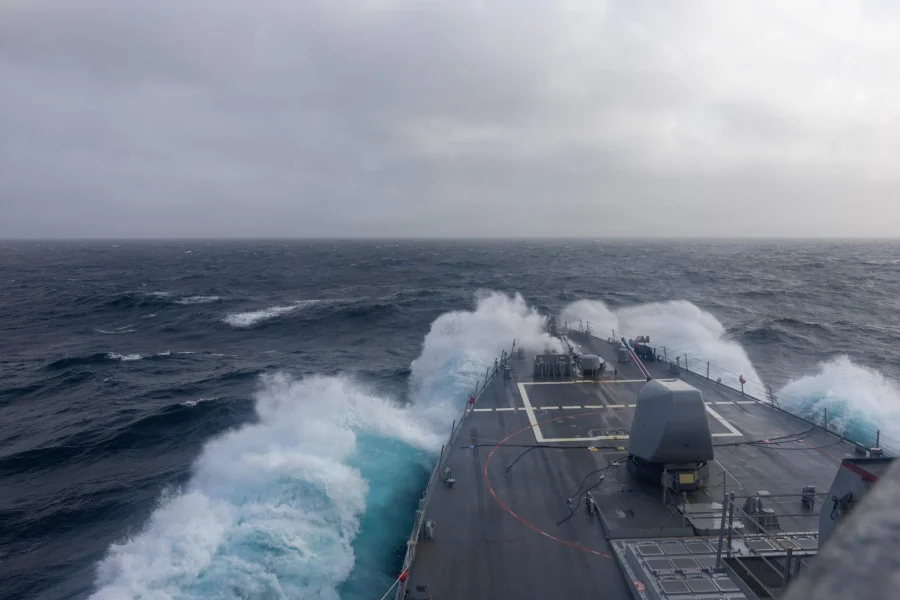

The United States has trapped Iran’s oil exports, but Tehran’s rivals in the Persian Gulf are ready to surge their own shipments. The standoff centers on the Strait of Hormuz, a narrow waterway that carries a huge share of the world’s oil. Iran claims it has closed the strait, but that is not true — significant volumes of crude are still moving through it.
Strait of Hormuz Stalemate: Iran’s Claims vs. Reality
The U.S. cannot fully reopen the Strait of Hormuz, and Iran cannot stop every ship from transporting oil through the narrow waterway. This creates a strange balance of power. According to Fortune, the result is a stalemate where oil prices stay choppy but relatively in check, and missiles are still launched without all-out war returning.
For now, significant volumes of oil are still sneaking through the Strait of Hormuz. This directly contradicts Tehran’s claims that it has completely closed off the waterway. The reality is that the strait remains a working route, even under pressure.
Persian Gulf Rivals Surge Exports with "Dark" Fleet
While Iran’s oil is trapped, its regional competitors are moving ahead. Iraq, Qatar, Kuwait, and the UAE are using a "dark" fleet to shuttle supplies in and out of the region. These are ships that operate without broadcasting their location, helping rivals keep exports flowing.
According to Fortune on LinkedIn, Iran’s oil is trapped while rivals’ exports from the Persian Gulf are poised to surge. This puts Tehran in a difficult spot — its own crude is blocked, but its neighbors are profiting from the same waterway.
US Pressure on Iran: Crude Exports and Critical Goods Blocked
The U.S. is preventing Iran from exporting its crude supplies or importing critical goods. At the same time, American forces are grappling with munitions and readiness issues. This combination makes the situation more complicated for Washington.
The U.S. cannot fully control the strait, and its military faces practical limits. This means the pressure on Iran is real, but it is not total. The chokehold is strong, but it has gaps.
"The result has been a stalemate where oil prices stay choppy but relatively in check and missiles are still launched without all-out war returning. This uneasy equilibrium, however, isn’t likely to last." — Fortune
What Tehran Could Do to Break the Chokehold
The key question is what Iran will do next. Tehran could do whatever it takes to break the chokehold. This is a direct warning that the current situation may not stay peaceful.
Iran has options, but they come with risks. Escalation could mean more missile launches, attempts to disrupt rival shipments, or direct confrontation with US forces. The uneasy equilibrium that exists today is fragile.
- Iran’s oil exports are blocked, but the Strait of Hormuz is not fully closed
- Rivals Iraq, Qatar, Kuwait, and UAE are surging exports using a "dark" fleet
- The US faces munitions and readiness issues while enforcing the chokehold
- Oil prices remain choppy but relatively controlled despite the tension
- Tehran could take drastic action to break the blockade
Our Take: The Chokehold Is Not Sustainable
To put it plainly, this is a dangerous waiting game. The U.S. has trapped Iran’s oil, but it cannot fully control the Strait of Hormuz. Iran’s rivals are taking advantage of the situation, surging their own exports while Tehran watches.
In our view, the current stalemate cannot last. Iran has made it clear it will do whatever it takes to break the chokehold. That is not an empty threat — it is a signal that escalation is possible. The market should prepare for more volatility, not less.
For readers, the takeaway is simple: the oil market is not stable. It is being held together by a fragile balance that could break at any moment. When it does, the impact will be felt far beyond the Persian Gulf.