


The United States has changed its approach toward Iran. President Donald Trump has repeatedly signaled he's in no hurry to reach a deal with Iran as he pivots from all-out war to a campaign of economic pressure.
After 40 days of heavy bombing and two more weeks of daily attacks, the U.S. is now relying on a naval blockade to force Iran to fully reopen the Strait of Hormuz and return global oil markets to normalcy.
But Tehran is not backing down. According to Yahoo News, Iran has shifted from a defensive stance to a "fully offensive" one, a senior Iranian official told Reuters on Monday, citing the stalemate with the U.S. on talks.
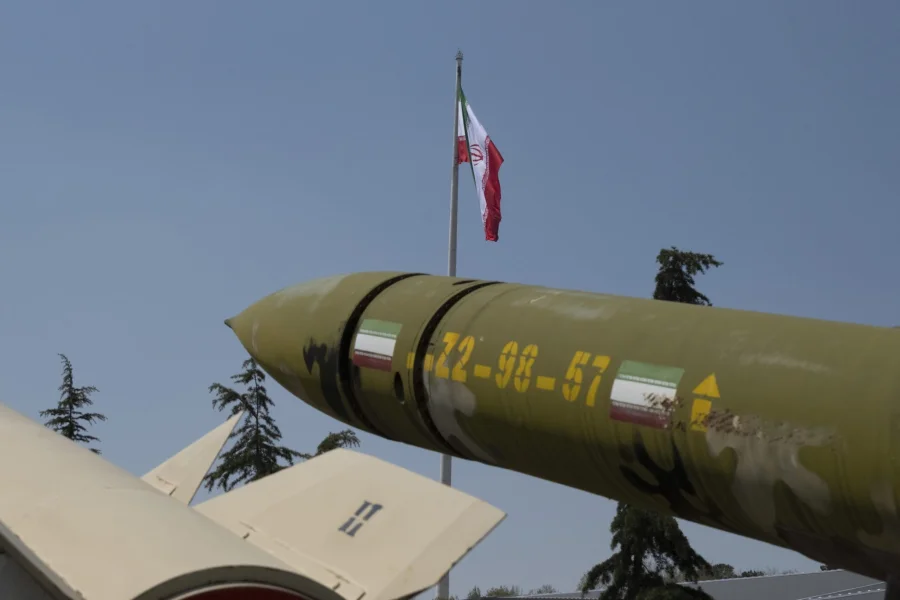
Iran's 'Fully Offensive' Stance and Attack Plans
The regime has plans to go into attack mode soon if there's no diplomatic progress. This would force the U.S. back into major combat just as vulnerabilities have emerged in its own military.
Iran's position is clear: unless the U.S. implements the June ceasefire deal, Tehran is prepared to escalate. The shift from defense to offense marks a significant change in the conflict's dynamics.
"Iran has shifted from a defensive stance to a 'fully offensive' one." — Senior Iranian official via Yahoo News
Economic War Strategy and the Strait of Hormuz
The U.S. naval blockade targets the Strait of Hormuz, a critical passage for global oil shipments. By cutting off this route, Washington aims to pressure Tehran economically without resuming large-scale bombing.
According to Fortune, Trump pivoted from bombs to economic war. But in Iran's view, the real fighting hasn't started yet. This suggests Tehran sees the current blockade as just one phase of a longer conflict.
President Trump signaled on Sunday that he was prepared to let economic pressure on Iran mount rather than order a new military offensive, even as Tehran considers its next move, as reported by Iran International English.
What This Means for the Conflict
The situation has reached a delicate point. The U.S. wants to avoid another round of heavy bombing. Iran, however, appears ready to escalate if talks remain stalled.
Key factors in this standoff:
- The U.S. has shifted from military strikes to economic pressure through a naval blockade
- Iran has moved from defense to a "fully offensive" posture
- Tehran demands the U.S. implement the June ceasefire deal before any talks
- Vulnerabilities in the U.S. military could complicate a return to combat
Our Take: A Dangerous Waiting Game
To put it plainly, this is a risky standoff with no clear exit. The U.S. believes economic pressure will force Iran to the table. Iran, on the other hand, seems convinced that the real fight is still ahead.
In our view, the biggest danger is miscalculation. The U.S. sees the blockade as a measured step. Tehran sees it as an act of war that demands a response. If Iran follows through on its plan to go on the offensive, the U.S. may have no choice but to re-enter major combat — exactly what Washington tried to avoid.
The June ceasefire deal is now the central sticking point. Without it, the region could slide back into full-scale conflict. Both sides are waiting for the other to blink. The question is who will — and at what cost.
For now, the world watches as an economic war unfolds, with the threat of real fighting still hanging in the air.