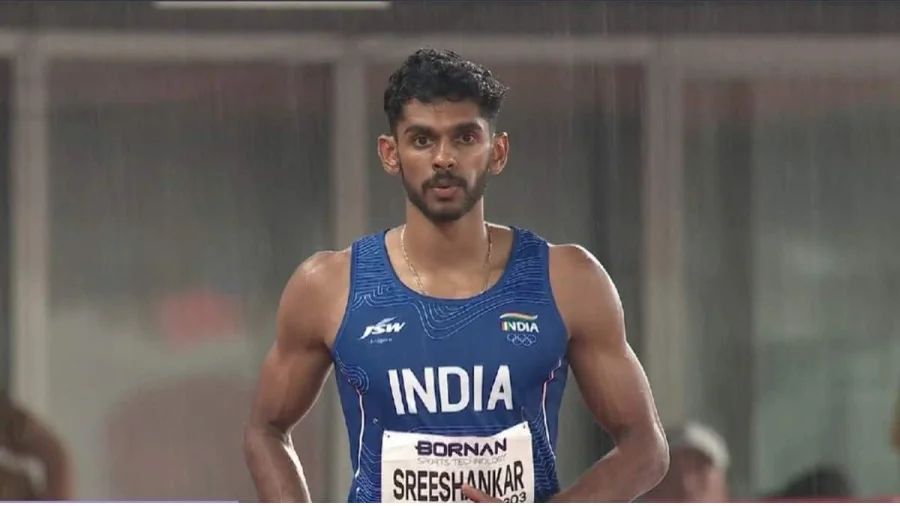

Indian long jump star Murali Sreeshankar has won a silver medal at the Asian Games 2026. He fought through a painful knee injury and heavy rain to reach the podium. The competition took place in Aichi-Nagoya, and it turned into one of the tightest finals possible.
Sreeshankar's best jump of the day was 8.07 metres, recorded with a wind reading of -0.1 m/s. That jump came on his second attempt and proved to be the one that secured his place on the podium.
Asian Games 2026 Long Jump Final: How Tight Was the Race?
The final was extremely close. Only eleven centimetres separated the top three finishes. That means one small mistake — a slightly short landing, a bad step on the runway — could have changed the entire medal order.
For Sreeshankar, the challenge was even bigger than for his rivals. He picked up a knee injury during the competition, and the weather made things worse. Heavy rain left the runway slick, which is dangerous for long jumpers who need a fast, stable approach to generate speed.
Despite the pain and the wet surface, he kept going. His second attempt of 8.07 metres stood as his best effort and ultimately decided his medal.
Why This Silver Matters for Indian Athletics
Winning a medal at the Asian Games is a big deal for any athlete. Doing it while injured, in bad weather, and in a final where the top three were separated by just 11 centimetres makes it even more impressive.
The conditions on the day were far from ideal. Rain delays and a wet runway can throw off a jumper's rhythm, timing, and confidence. Sreeshankar had to deal with all of that on top of physical discomfort in his knee.
- Best jump: 8.07 metres on his second attempt
- Wind reading: -0.1 m/s
- Gap between top three: just 11 centimetres
- Obstacles faced: knee injury and heavy rain
- Venue: Aichi-Nagoya, Asian Games 2026
Our Take: Grit Over Perfect Conditions
In our view, this silver medal says more about Sreeshankar's mental strength than any easy win ever could. Anyone can jump well on a dry track with a healthy body. Very few athletes can hold their nerve when their knee hurts, the runway is wet, and the margin for error is 11 centimetres across three competitors.
To put it plainly, this is the kind of result that builds a career. It shows that Sreeshankar can deliver under pressure, not just in perfect conditions. For Indian athletics, it is another sign that the country's field events are producing athletes who can compete at the highest level in Asia.
What should readers take from this? Simple — a medal is not just about talent. It is about showing up, pushing through pain, and executing when it counts. Sreeshankar did exactly that.