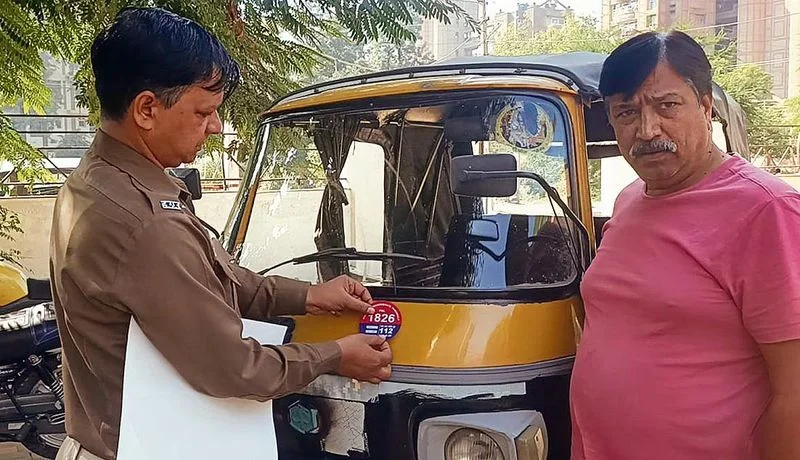

Panchkula police have launched a special verification drive for all auto-rickshaws and e-rickshaws operating in the district. The goal is to make public transport safer, more transparent, and better organised.
Under this campaign, every verified vehicle will be issued a departmental unique identification sticker. This sticker will help authorities quickly identify vehicles and drivers, especially in case of any criminal incident.
Why Panchkula police are issuing unique ID stickers for auto-rickshaws
The main aim of the drive is to improve passenger safety. Police also want to control illegally operated vehicles and strengthen traffic management across the district.
According to The Tribune, the initiative ensures quick identification of vehicles and drivers in case of any criminal incident. This means passengers can feel more secure knowing that every registered auto-rickshaw and e-rickshaw is verified by the police department.
How the verification process works
Every auto-rickshaw and e-rickshaw in the district will be verified in a phased manner. After successful verification, each vehicle will receive a unique identification sticker issued by the department.
ACP Traffic Surender Singh has been appointed as the nodal officer to supervise the implementation of the campaign. His role is to ensure the drive runs smoothly and all vehicles are properly checked.
Our Take: A practical step for passenger safety
This is a straightforward and practical move by Panchkula police. In our view, the unique ID sticker system addresses a real problem — it is often difficult for passengers or authorities to quickly identify a specific auto-rickshaw or e-rickshaw in case of disputes, accidents, or crimes. By linking each vehicle to a verified sticker, the police create a simple but effective tracking system.
What stands out is the phased approach. Instead of a chaotic one-time enforcement, the police are rolling out verification in stages, which gives drivers time to comply. The appointment of a dedicated nodal officer also shows serious intent.
For passengers, this means more accountability. For drivers who operate legally, it creates a level playing field. The real test will be enforcement — whether unverified vehicles are actually stopped from operating. But as a first step, this initiative is a clear win for public safety.