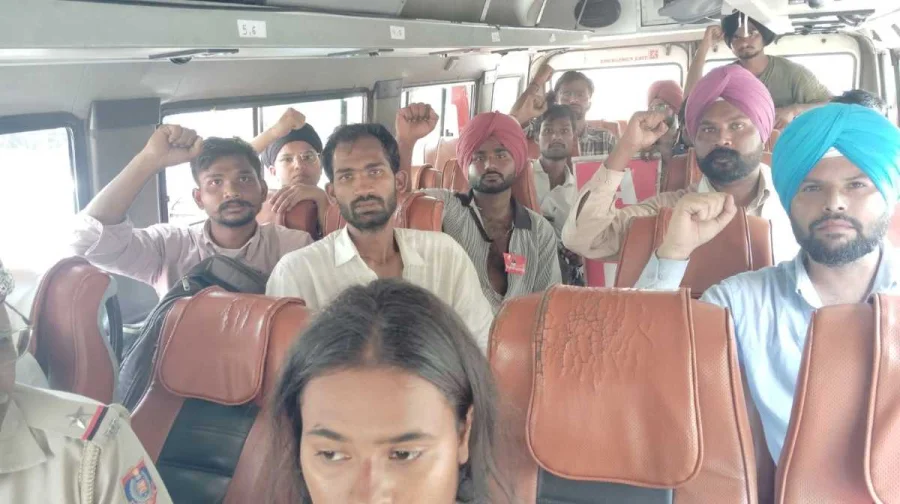

Around 200 students from different districts of Punjab reached Delhi to take part in a protest led by the Cockroach Janata Party (CJP) against Chief Election Commissioner Gyanesh Kumar at Jantar Mantar. Several of them were detained by the police during their march towards the protest site.
The students had travelled a long distance to join the demonstration. They changed trains and took sleeper buses to reach the capital, according to student leaders. The group was mobilised under the banners of the Punjab Students Union and Naujawan Bharat Sabha.
Punjab Students Detained During Jantar Mantar March
The detained students were taken to Suraj Mal Stadium and Rajiv Gandhi Stadium. Some others were transported in buses to locations far from Delhi and dropped along the Sonepat road, student leaders said.
Ranbir Singh Randhawa, a leader of the group, told The Tribune that the students had spent the night at Gurdwara Bangla Sahib before setting out for Jantar Mantar. The students had gathered from various districts across Punjab for the protest.
Why Punjab Students Travelled to Delhi for the CJP Protest
The protest was organised by the Cockroach Janata Party against Chief Election Commissioner Gyanesh Kumar. Students from Punjab decided to join the demonstration despite the distance involved.
The journey involved multiple modes of transport. Students changed trains and boarded sleeper buses to cover the distance between Punjab and Delhi. They assembled in the capital and stayed overnight at Gurdwara Bangla Sahib before heading to the protest site.
When they began their march towards Jantar Mantar, police intervened. Several students were detained and taken to stadiums on the outskirts of Delhi. Others were put on buses and dropped far from the city along the Sonepat road.
Our Take: What This Means for Student Protesters from Punjab
In our view, this incident raises a simple question: why were students who travelled hundreds of kilometres to exercise their right to protest stopped and detained? The students came from different districts of Punjab, spent their own money on trains and buses, and stayed overnight at a gurdwara. They were not hiding their intentions — they were marching openly towards a protest site.
To put it plainly, detaining students and dropping them along the Sonepat road does not address whatever concerns they were raising. It only creates more distance between young people and the institutions they are trying to engage with. The students wanted to be heard at Jantar Mantar. Instead, they were taken to stadiums and bus stops far from the capital.
Readers should note that peaceful protest is a democratic right. When students from Punjab — or any part of the country — travel to Delhi to join a demonstration, the response should be to allow them to express their views, not to detain them and send them away. This news matters because it shows how student voices from outside the capital are being treated when they try to participate in national conversations.