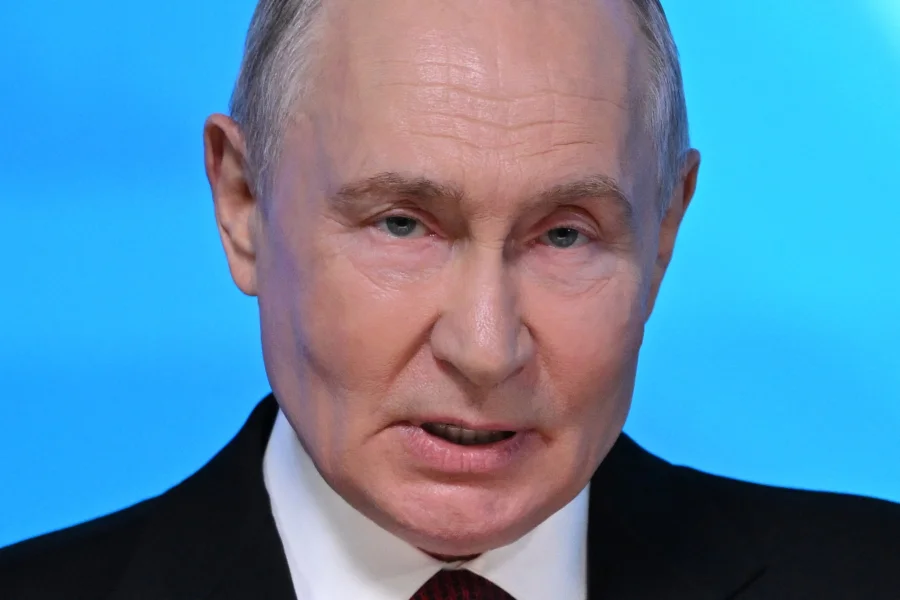

Russian President Vladimir Putin said Russia is not planning to attack European countries. But he also warned that Moscow will respond with "all weapons" in its arsenal if there is a direct attack on the Russian Federation. He made these remarks at a foreign policy forum.
Putin's message was aimed at both sides. On one hand, he said Russia has no plans to strike Europe. On the other, he made clear that any direct attack on Russia would bring a full response. The phrase "all weapons" is the part that has drawn the most attention.
Putin Blames West and Europe for Rising Tensions
At the forum, Putin accused the West and Europe of escalating tensions. He pointed to several things. He said Europe is talking about preparing for a war with Moscow in the coming years. He also mentioned military drills in the Baltic Sea and the seizing of Russian vessels.
Putin's comments did not come in isolation. Moscow had already warned NATO that it would not hesitate to use nuclear weapons to defend Kaliningrad. That warning was issued in case any member of the military alliance tried to cut off the Baltic exclave from the rest of Russia.
Several Russian embassies in Europe also issued statements saying Moscow has information that NATO is planning something. The original story did not give full details of those statements.
Why the 'All Arsenal' Warning Matters
The key point is the wording. Putin did not say Russia would use nuclear weapons first. He said Russia would respond to aggression with "all weapons" in its arsenal. That leaves the door open to many kinds of weapons, not just one.
At the same time, Putin repeated Russia's long-held position that it is not planning to attack European countries. This is a denial meant to calm fears in Europe. But it comes with a threat attached.
To put it plainly, Putin is sending two messages at once. To Europe, he is saying: we are not coming for you. To NATO, he is saying: if you strike us directly, the response will be total.
Our Take: A Dangerous Game on Both Sides
In our view, this is a dangerous game. Putin says Russia is not planning to attack Europe, but he also warns of a response with "all weapons." That mix of denial and threat keeps tensions high. It also makes it harder for either side to step back.
What should readers take from this? First, the warning is conditional. Putin tied it to a "direct attack on the Russian Federation." That means the threat is not about a small clash. It is about a full strike on Russian territory.
Second, the blame game is running both ways. Putin blames the West and Europe for escalating. Europe and NATO have their own concerns about Russia. When both sides say the other is preparing for war, trust breaks down.
Third, the Kaliningrad warning shows how quickly a local issue can turn into a nuclear threat. Kaliningrad is a small piece of Russia sitting apart from the rest of the country. Any move to cut it off would be seen by Moscow as a direct challenge.
The bottom line: Putin's words are a warning, not an announcement of an attack. But warnings like this can go wrong. A mistake, a misread signal, or a small incident could push things further than anyone wants. For now, the message from Moscow is simple: Russia says it will not strike first, but it promises a massive response if it is hit.