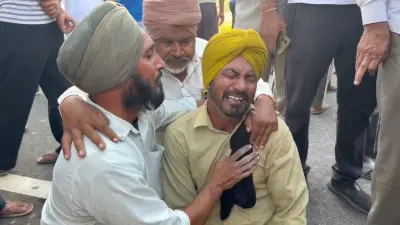
Former Congress MP Sajjan Kumar, who was serving a life sentence in a 1984 anti-Sikh riots case, has died. He passed away at Delhi's Safdarjung Hospital on Thursday morning after being taken there from Tihar Jail.
Sajjan Kumar death: What happened at the hospital
Kumar was reportedly suffering from various ailments and was declared brought dead at the hospital. The former lawmaker had been in custody at Tihar Jail, where he was serving his sentence.
According to Hindustan Times, Kumar was a former Congress MP who was sentenced to life imprisonment for his role in the 1984 anti-Sikh riots. He was convicted for the murder of Sikhs during the violence.
Conviction in the 1984 anti-Sikh riots case
Kumar's conviction came from Delhi's Rouse Avenue court on February 12 last year. The court found him guilty in a case involving rioting, unlawful assembly, murder and other offences. Thirteen days after the conviction, he was sentenced to life imprisonment.
As reported by BBC News, Kumar's conviction was seen as a milestone in the long-running legal battle over the 1984 anti-Sikh riots, which spread across Delhi following the assassination of then-Prime Minister Indira Gandhi.
Families of victims sought death penalty
During the legal proceedings, families of those killed in the riots had sought the death penalty for Kumar. The court, however, handed down a life sentence instead.
The Wikipedia entry on Sajjan Kumar notes that he served as a Member of Parliament in the Lok Sabha across multiple terms, representing constituencies including Outer Delhi. His political career spanned from 1980 through 2009.
Our Take: A chapter closes in a painful case
To put it plainly, the death of Sajjan Kumar closes a chapter in one of India's most painful episodes of communal violence. The 1984 anti-Sikh riots remain a deep wound in the country's history, and Kumar's conviction was a rare instance of accountability for those events.
The fact that victims' families sought the death penalty shows how deeply the wounds run. While Kumar's death means he will not serve out his full sentence, the conviction itself stands as an important legal milestone. It sent a message that even decades later, those responsible for the violence could be brought to justice.
For the families who waited years for closure, this may not bring full satisfaction. But the legal process ran its course, and a conviction was secured. That matters, even if the sentence was cut short by death.