
Summary
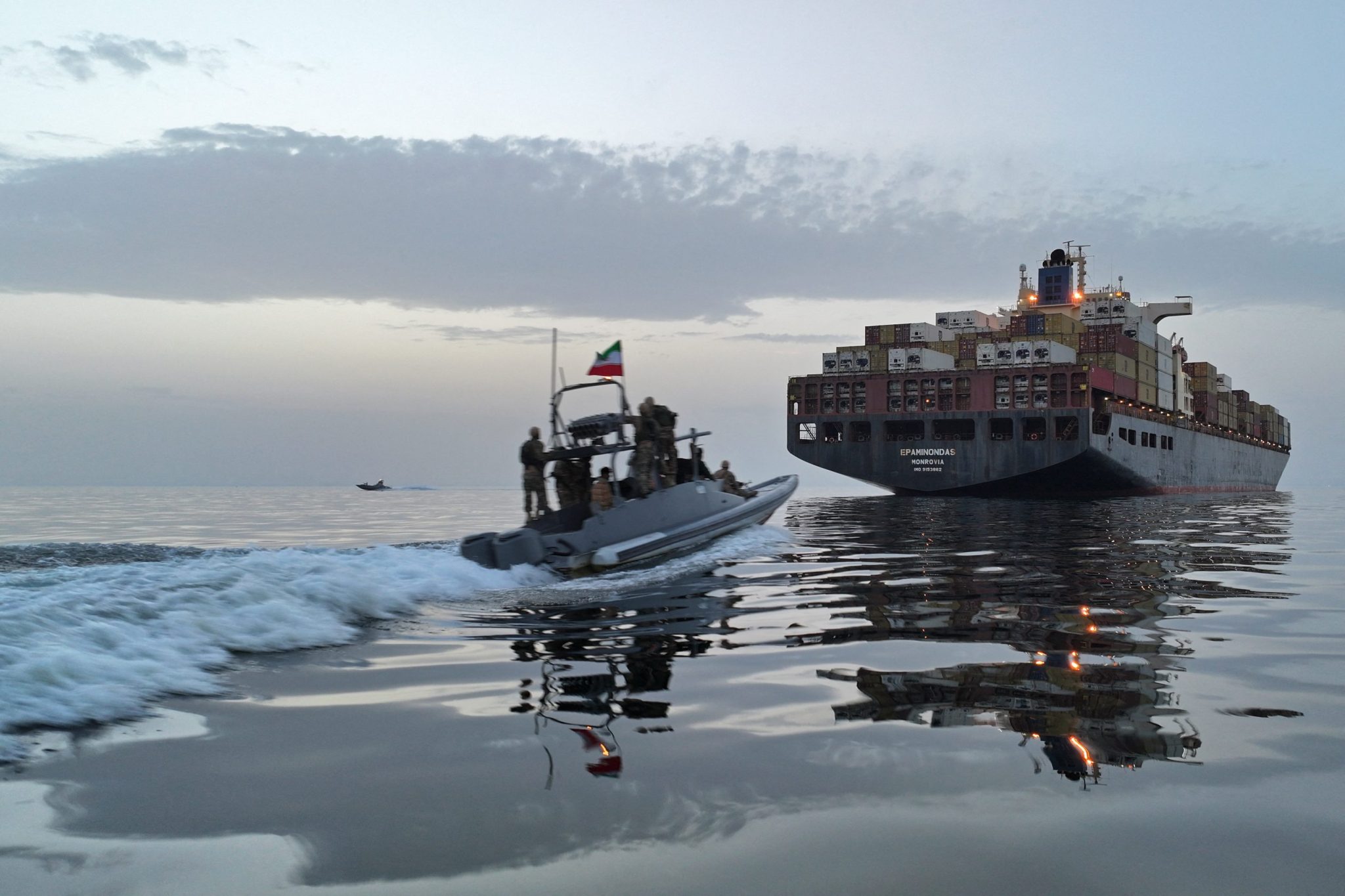
A cargo ship traveling through the waters near the Strait of Hormuz came under attack by several small boats on Sunday. This incident is the latest in a series of more than two dozen attacks reported since the conflict between the United States and Iran began earlier this year. While the crew of the ship is reported to be safe, the event highlights the ongoing danger in one of the world’s most important shipping routes. At the same time, both nations are looking at new peace proposals, though a final agreement remains far away.
Main Impact
The attack shows that despite a three-week ceasefire, the waters near Iran remain a high-risk zone for international trade. Iran has claimed it now controls the Strait of Hormuz and is demanding that ships pay a toll to pass through. This move goes against international laws that say these waters should be free for all ships. The tension is causing major problems for global markets, as a large portion of the world's oil and gas must pass through this narrow area to reach other countries.
Key Details
What Happened
The British military’s maritime center reported that a northbound cargo ship was approached and attacked by multiple small craft near Sirik, Iran. These small boats are often hard to see on radar because they are fast and nimble. Although the ship was targeted, the crew managed to stay safe and no major damage was reported. This is the first attack of its kind in about two weeks, showing that the threat to shipping is still very high.
Important Numbers and Facts
The conflict has led to several startling figures that show the scale of the crisis. Since the war started on February 28, there have been at least 24 attacks on ships in the region. The U.S. naval blockade has forced 49 commercial ships to turn back to avoid the conflict zone. Economically, Iran is struggling as its currency, the rial, has dropped to a record low of 1.84 million per U.S. dollar. Additionally, U.S. officials estimate that Iran has only collected about $1.3 million in tolls from ships, which is a very small amount compared to what they usually earn from selling oil.
Background and Context
The Strait of Hormuz is a vital waterway located between the Persian Gulf and the Gulf of Oman. About 20% of the world's oil and natural gas moves through this point. When the war began in late February, Iran took steps to control the area, which immediately caused global energy prices to shake. The U.S. responded by setting up a naval blockade to stop Iran from exporting its oil. This has put a lot of pressure on Iran’s economy, leading to job losses and rising prices for basic goods in Iranian cities.
Public or Industry Reaction
The international shipping industry is on high alert. The U.S. government has warned shipping companies that they could face legal trouble or sanctions if they pay Iran the tolls they are demanding. Meanwhile, leaders in Pakistan and Oman are trying to act as middle-men to help the U.S. and Iran reach a deal. In the U.S., President Trump has expressed doubt about the current peace proposals, suggesting that Iran has not yet faced enough consequences for its actions over the past several decades. In Iran, government officials remain firm, stating they will not give up their control of the strait.
What This Means Going Forward
The next few weeks will be critical for both diplomacy and trade. Iran has put forward a 14-point peace plan that asks the U.S. to lift sanctions and end the naval blockade. However, the U.S. is still reviewing this plan and may not agree to all the terms. If a deal is not reached soon, Iran’s oil storage tanks may become completely full, forcing them to shut down their oil wells. This would cause even more damage to their economy. For the rest of the world, the risk of higher fuel prices remains as long as the Strait of Hormuz is not fully open and safe for all ships.
Final Take
The attack on the cargo ship is a clear reminder that a ceasefire on land does not always mean peace at sea. While diplomats are talking about peace plans and 14-point proposals, the reality on the water remains dangerous. The struggle over who controls the Strait of Hormuz is not just a local fight; it is a global issue that affects the price of energy and the safety of international trade. Until both sides can agree on how to share these waters, the threat of more attacks will continue to hang over the region.
Frequently Asked Questions
Why is the Strait of Hormuz so important?
It is a narrow waterway that serves as the main exit for oil and gas coming from the Persian Gulf. Nearly one-fifth of the world's total oil supply passes through this area, making it essential for the global economy.
What is Iran asking for in its peace proposal?
Iran has suggested a 14-point plan that includes the removal of U.S. sanctions, an end to the naval blockade of its ports, and the withdrawal of U.S. military forces from the region.
Is it safe for ships to travel through the area right now?
The area is currently considered high-risk. While some ships are still moving, many have been attacked or turned back. The U.S. military has warned companies not to pay tolls to Iran, and the threat of small boat attacks remains critical.