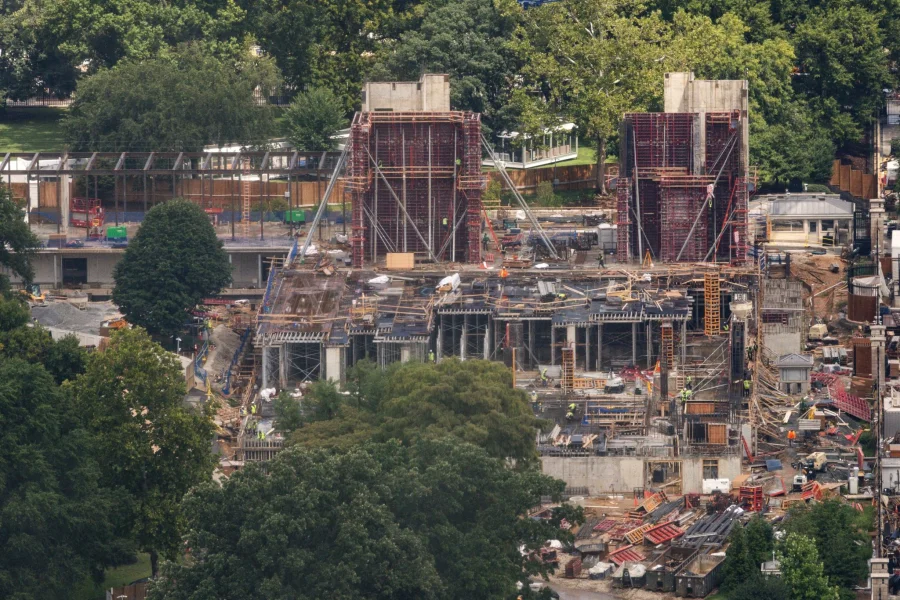

The Trump administration has asked the U.S. Supreme Court to allow the White House to keep building its $400 million ballroom project while it appeals a lower court's order to stop the work.
The solicitor general filed a petition asking the high court to suspend last week's ruling by a three-judge panel from the U.S. Court of Appeals for the District of Columbia Circuit. The divided panel ruled that Trump must halt construction because Congress has not approved the project.
White House ballroom construction dispute reaches Supreme Court
The appeals court's majority said Trump does not have the unilateral authority to build the 90,000-square-foot (8,400-square-meter) ballroom. The administration argues the project should continue while the legal fight plays out.
According to AP News, the administration's filing asks the Supreme Court to step in and allow construction to proceed during the appeal process.
Chief Justice John Roberts has set a deadline of Tuesday for plaintiffs challenging the ballroom project to respond to the administration's request.
Administration argues ballroom is 'beyond the point of no return'
The administration has argued in its appeal that the White House ballroom project has reached a stage where stopping work would cause significant problems. According to 6abc Philadelphia, the administration says the project is "beyond the point of no return" and should be allowed to continue.
The legal fight centers on whether the president has the authority to fund and build the ballroom without explicit approval from Congress. The appeals court ruled against the administration, but the White House is now asking the nation's highest court to intervene.
"An appeals court has ordered the Trump administration to stop construction of a proposed White House ballroom until it receives approval from Congress." — ABC30
What happens next in the ballroom legal battle
The Supreme Court now faces a decision on whether to temporarily allow construction to continue while the full appeal moves forward. The plaintiffs who challenged the project must respond by Tuesday, and the court will then decide how to proceed.
According to MS Now, the administration's request focuses on keeping the project moving while the legal questions are resolved.
The case raises important questions about presidential authority and the role of Congress in approving major White House projects. The outcome could set a precedent for how future administrations handle similar construction initiatives.
Our Take: A test of presidential authority and legal process
This case is about more than a ballroom. It is a direct test of whether the president can move forward with major spending projects without congressional approval.
To put it plainly, the administration is asking the Supreme Court to let construction continue even after a court said it must stop. That is a significant request. The appeals court already ruled that Congress has not approved this project, and the administration is now trying to work around that decision.
The "beyond the point of no return" argument is worth watching. If courts accept that reasoning, it could give presidents a way to start projects and then claim they are too far along to stop — even when they lack legal authority to begin with.
Chief Justice Roberts' Tuesday deadline means this will move quickly. The Supreme Court's decision here will tell us a lot about how it views the balance of power between the president and Congress when it comes to spending taxpayer money.