
The debate over whether artificial intelligence is a bubble has dominated market conversations. But one strategist says that question misses the point entirely.
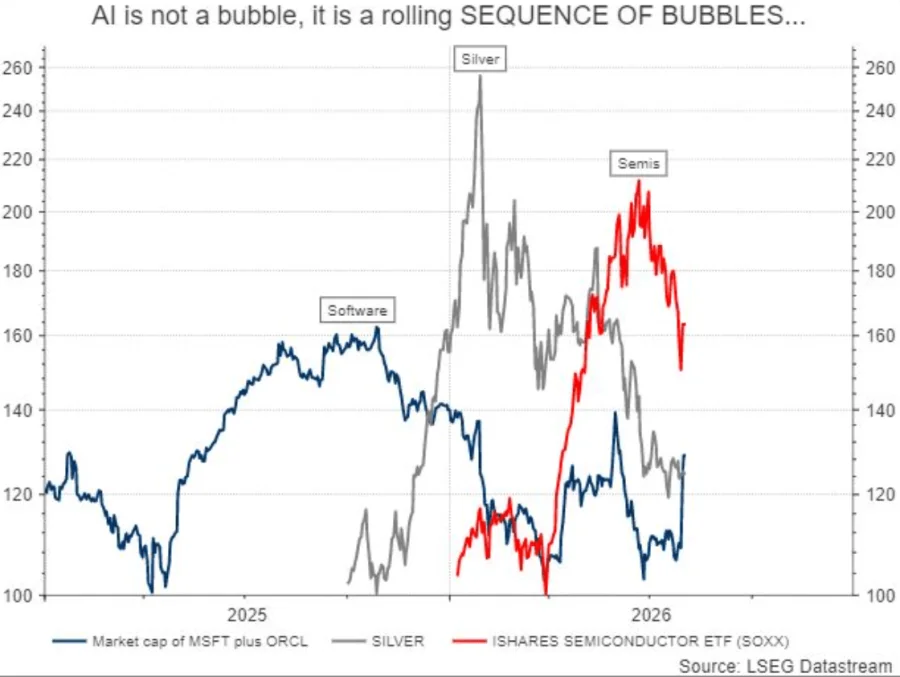
Dhaval Joshi, until recently the chief strategist for Counterpoint at London's BCA Research, argues the real issue is not whether AI is a bubble — it's which AI bubble is popping right now.
Why the 'Is AI a Bubble?' Question Is the Wrong One
Joshi has built a reputation for contrarian, structurally minded calls on the AI trade. A week ago, he reframed the entire "is AI a bubble" debate itself, writing on LinkedIn.
His argument challenges the classic picture of one giant bubble building until it eventually implodes. Instead, Joshi describes a different pattern entirely — a rapid-fire sequence of bubbles popping and inflating in a rolling pattern.
According to the discussion around this thesis, investors are misjudging, and then correcting, who or what will actually capture AI's value. This constant misjudgment and correction creates a rolling series of mini-bubbles rather than one single, massive one.
How the Rolling Bubble Sequence Works
The key insight is that the AI market does not move as one unit. Different parts of the AI ecosystem — from chip makers to software companies to application builders — rise and fall at different times as investors shift their bets on who will ultimately profit most from AI.
This creates a pattern where one segment inflates, pops, and then another inflates in its place. The cycle repeats as the market continuously re-evaluates where AI's real value lies.
The idea has sparked conversation among industry observers. One commenter, Artificial Genius President Paul Burchard, asked Joshi whether AI is like the infamous tulip — a reference to the Dutch tulip mania, one of history's most famous speculative bubbles.
What This Means for Investors Watching AI Stocks
For investors, this framework changes how to think about risk in AI-related investments. Rather than asking whether the whole sector is overvalued, the more useful question becomes which specific segment is currently overvalued and due for a correction.
The rolling bubble model suggests that losses in one AI area may not signal the end of the AI trade overall. Instead, capital may simply rotate to another part of the AI ecosystem that investors believe will capture value next.
This also means that timing matters more than a simple buy-or-avoid decision on AI as a whole. Understanding which bubble is inflating and which is popping becomes the critical skill.
Our Take: A More Useful Way to Think About AI Risk
Joshi's framing is genuinely helpful. The binary "is AI a bubble?" question forces investors into an all-or-nothing stance that does not match how markets actually behave.
To put it plainly: the rolling sequence model is more honest about the uncertainty here. Nobody knows for certain which AI companies will end up capturing the most value. The market is figuring this out in real time, and that process naturally creates overshoots and corrections in different segments at different times.
The tulip comparison raised by Burchard is worth taking seriously, but with a caveat. Tulips had no underlying productivity story. AI does. That does not mean every AI stock is fairly priced — far from it. But it does mean the correction pattern may look more like a series of sector rotations than a single catastrophic collapse.
For readers, the practical takeaway is simple: stop asking if AI is a bubble. Start asking which part of the AI trade looks most stretched today. That is the question that will actually help you navigate the market.