
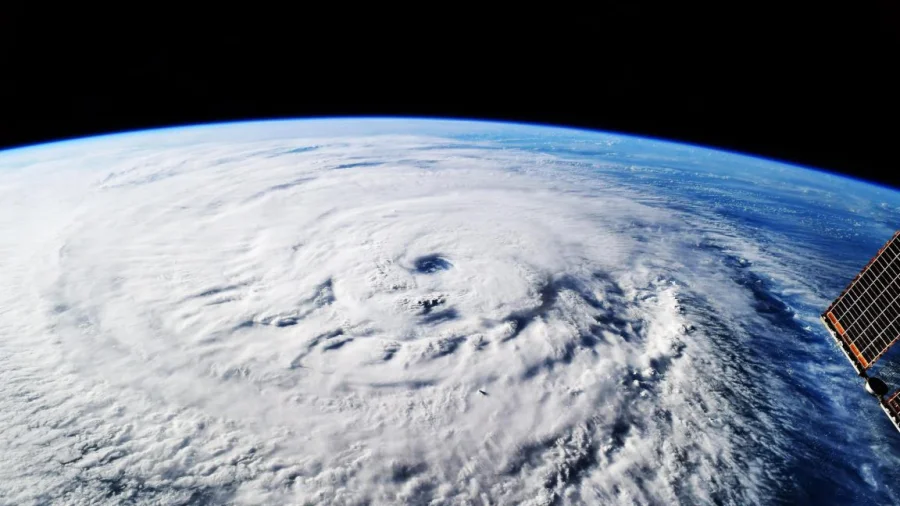

Google DeepMind's artificial intelligence model WeatherNext has surprised weather scientists with its ability to predict hurricanes with unprecedented accuracy. The breakthrough, published in the journal Nature, shows that AI can give forecasters more time to warn communities in the path of dangerous storms.
How WeatherNext Predicted Hurricane Melissa
In October 2025, a storm brewed over the Caribbean Sea. Weather models disagreed on where it would go. Some said it would stay weak and end up in Haiti. Others predicted it would strengthen and head to Jamaica.
According to daily.dev, the WeatherNext AI model went with the latter prediction. Five days before landfall, it forecast with 80 percent confidence that the storm system would hit Jamaica as a Category 5 hurricane.
Hurricane Melissa turned out to be catastrophic. It caused flooding and landslides across Jamaica. But the AI model's early warning helped forecasters alert communities in the storm's path, giving them more time to prepare.
Why Weather Scientists Are Surprised
The system has drawn notable attention from the scientific community. According to hyper.ai, many weather researchers expressed surprise at the model's predictive performance.
The research paper, published in Nature on Thursday, shows that WeatherNext can predict cyclones with accuracy that traditional models cannot match. On average, it gives forecasters more lead time than existing methods.
This matters because every extra hour of warning can save lives. Communities can evacuate earlier, secure their homes, and move to safer ground before a storm hits.
What Makes WeatherNext Different
WeatherNext is not just another weather app. It is an AI system built specifically for forecasting. Unlike traditional numerical weather prediction models that solve complex physics equations, WeatherNext learns patterns from historical weather data.
According to Hacker News, powerful problem-specific AI models like this are outperforming classic weather prediction models while being far more efficient. The discussion highlights that the best AI weather models are already beating traditional approaches.
The model's success with Hurricane Melissa is a clear example. Traditional models were split on the storm's path. WeatherNext made a confident call and was right.
Earlier Warnings Mean Better Preparation
The practical impact of this technology is straightforward. When forecasters know earlier that a hurricane will hit, they can act sooner.
In the case of Hurricane Melissa, the AI model's prediction allowed authorities to warn communities before the storm arrived. This gave people time to prepare for flooding and landslides that were about to come.
Google DeepMind is also open-sourcing WeatherNext, according to Reddit. This means researchers and forecasters around the world can use and improve the model.
Our Take: AI Is Changing Weather Forecasting for the Better
To put it plainly, this is a big deal. Weather forecasting has always been limited by how fast computers can solve complex equations. AI changes that equation entirely.
What impresses us most is not just the accuracy, but the confidence. WeatherNext did not just guess that Hurricane Melissa would hit Jamaica. It stated its prediction with 80 percent certainty five days ahead. That kind of clarity gives decision-makers something they rarely have: time.
There are still questions to answer. AI models are only as good as the data they learn from. And no model is perfect. But the evidence from Hurricane Melissa suggests that AI can genuinely help protect people from the worst effects of extreme weather.
For anyone living in hurricane-prone regions, this is good news. Earlier warnings mean safer communities. And with WeatherNext being open-sourced, the benefits could spread quickly across the world.