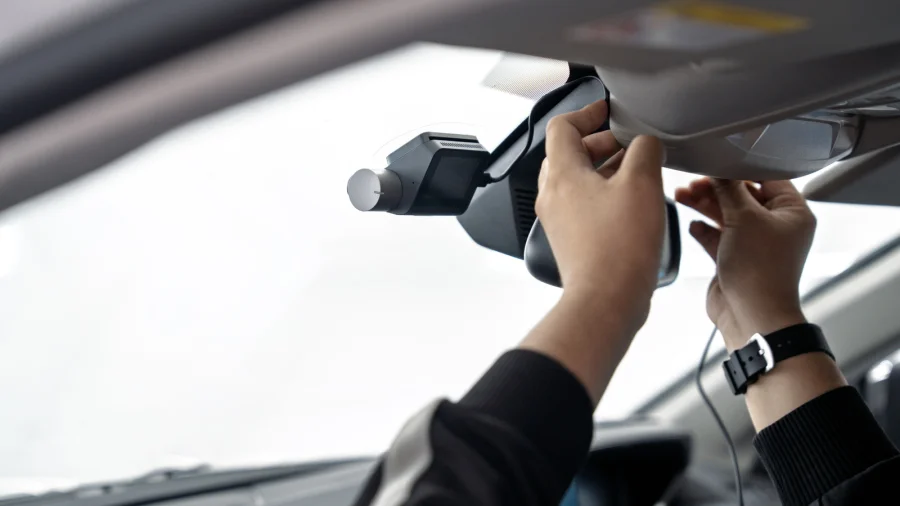

A backup camera is a small camera mounted at the back of a car. It sends a live video picture to a screen inside the vehicle so the driver can see what is behind them while reversing. That is the basic idea, and it is the reason the feature has become common on new cars and a popular add-on for older ones.
What Is a Backup Camera and What Does It Do?
The job of a backup camera is simple: show the driver the area directly behind the car. Without it, a driver has to rely on mirrors and by turning their head. Mirrors leave blind spots, especially close to the rear bumper where small objects, pets, or children can be hidden.
The camera removes much of that guesswork. Instead of estimating distance from a mirror, the driver looks at a screen and sees the actual space behind the vehicle.
How the Camera, Screen, and Wiring Work Together
A backup camera system has three main parts working as one:
- The camera — a small lens unit mounted at the rear of the car, often near the license plate or bumper
- The display — a screen inside the car, which can be a factory infotainment screen or a separate monitor
- The connection — wiring that carries the video signal from the camera to the screen and powers the camera
The system activates when the driver shifts the car into reverse. At that moment, the camera turns on and the screen switches to show the rear view. When the driver shifts out of reverse, the screen goes back to its normal state.
Factory vs Aftermarket Backup Cameras
Not all backup cameras are the same. A factory-installed camera is built into the car from the start. It is integrated with the vehicle's screen and electronics, so the image, switching, and placement are designed together as one system.
An aftermarket camera is added later, usually to an older car that did not come with one. These kits are sold separately and installed afterward. According to the original report, aftermarket backup cameras might not work as well as integrated ones, but they are still a useful upgrade to an older car.
To put it plainly, the gap comes down to integration. A factory system is tuned to the car it sits in. An aftermarket system has to be fitted into a car that was never designed for it, so the result can be less smooth.
Why This Matters for Drivers
For anyone driving an older car, the choice is straightforward. You can keep relying on mirrors alone, or you can add a camera and gain a direct view of the space behind you. The aftermarket option is not perfect, but it closes a real gap in visibility.
For buyers of newer cars, the factory camera is usually already there, and it tends to be the better-working version of the same idea.
Our Take: A Simple Tool That Earns Its Place
In our view, the backup camera is one of the few car features that is easy to understand and genuinely useful. There is no complicated technology story here — a camera sends a picture to a screen, and the driver sees behind the car. That is it.
The honest point is about expectations. If you drive an older car and add an aftermarket camera, do not expect it to feel identical to a factory system. It may not match the polish of an integrated setup. But it still does the core job: it shows you what mirrors miss.
For readers, the takeaway is simple. If your car did not come with a backup camera, adding one is a reasonable upgrade. Just go in knowing that integrated factory systems generally work better, while aftermarket kits remain a practical and worthwhile improvement for an older vehicle.