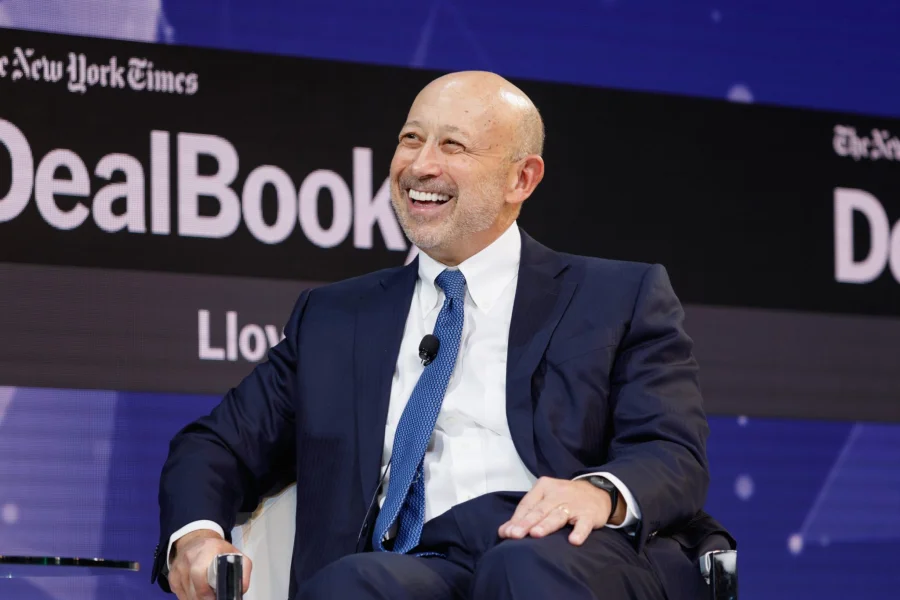

Lloyd Blankfein, the former CEO of Goldman Sachs, has a clear message at a time when some business leaders are questioning whether college is worth it: higher education is still the best way to break into the middle class. Blankfein knows this path firsthand, because he lived it.
He was born into public housing in Brooklyn. In his small New York City apartment, he shared a bedroom with his grandmother or his sister until he left for college. His high school, he told CBS earlier this year, was on the brink of shutting down. Instead of giving up, the teenager studied hard, became class valedictorian, and got into Harvard University at just 16 years old.
From Public Housing to Harvard: Blankfein's College Story
Blankfein's rise from a public housing apartment in Brooklyn to Harvard University is the core of his argument. He did not come from money or connections. He came from a school that was close to closing and a home where space was tight. What changed his life, in his telling, was education.
That launchpad led him to the top of Goldman Sachs, one of the most powerful banks in the world. His story is not just about one man's success. It is the example he uses to make his case that a college degree still opens doors that would otherwise stay shut.
Why Blankfein Is Pushing Back on Anti-College CEOs
Some business CEOs have put the college degree on blast. They question whether higher education really sets students up for success in the workforce. Blankfein is pushing back against that narrative.
His position is simple: for people who start with little, a degree is often the most reliable route into the middle class. When CEOs with successful careers tell young people that college is not worth it, Blankfein's own life story stands as a counterpoint. He was the teenager in public housing who got into Harvard at 16 — and that opportunity changed everything that followed.
Our Take: The College Debate Needs Blankfein's Voice
In our view, the debate over college has become too one-sided. It is easy for wealthy executives to say a degree is not necessary when they already have networks, capital, and name recognition. Blankfein's story matters because he started with none of that.
To put it plainly, a college degree is not a guarantee. But for students from public housing, struggling schools, and tight family budgets, it remains one of the few proven ladders into the middle class. Blankfein's message is not that college is the only path — it is that dismissing it entirely is a mistake that hurts the people with the least room for error.
Readers should take this away: when someone who made it from public housing to Harvard at 16 says education is the best way up, that is not theory. That is experience talking.