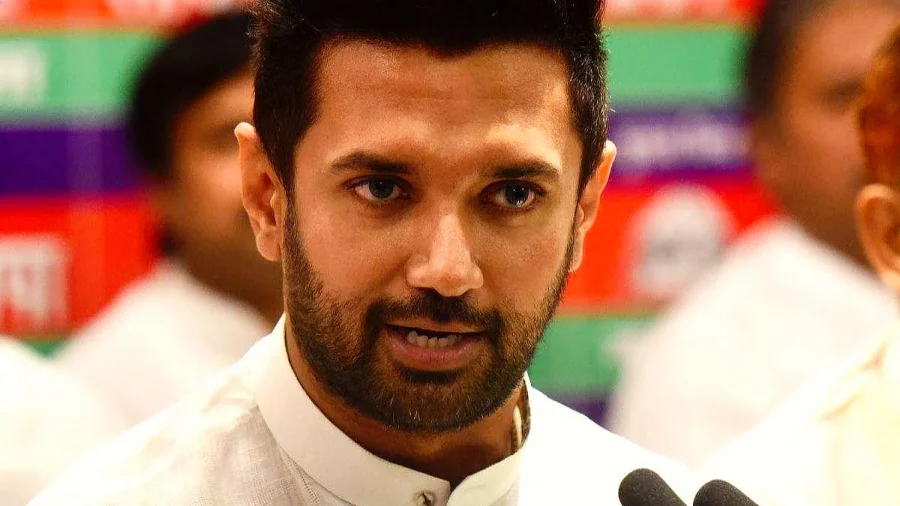

Union minister Chirag Paswan has responded to the planned protest by the Cockroach Janata Party (CJP) with a direct question: how many trains can anyone stop? His remarks came as cancellations of Delhi-bound trains ahead of the CJP's planned protest on 10 October raised questions over access to the national capital.
Speaking in Sonipat, Haryana, Paswan said transport restrictions cannot stop India's youth from making their voices heard. In his view, blocking movement is not the answer — dialogue is.
Chirag Paswan on CJP Protest and Train Cancellations
The Union minister's comments focus on a simple point. Trains can be cancelled, roads can be blocked, but young people who want to raise their voice will find a way to do it. Paswan made this argument while speaking about the CJP's planned protest and the transport curbs around it.
He urged the CJP to hold dialogue with the Chief Election Commissioner (CEC) instead of resorting to road blockades. His remarks follow criticism of Bihar's NDA government and calls for the CEC to address doubts over elections.
Why Paswan Wants Dialogue, Not Blockades
Paswan's position is that the concerns raised by the CJP are better addressed through conversation than through disruption. He pointed to the CEC as the right authority to answer doubts over elections, rather than letting the matter play out on roads and railway tracks.
To put it plainly, his message has two parts. First, you cannot physically stop a generation from speaking up. Second, if the demand is about election doubts, the CEC's door is the place to knock — not the railway line.
Our Take: Stopping Trains Is Not Stopping Voices
In our view, Paswan has framed the debate in the right way. A protest is a democratic right, and so is the right to travel. When trains to the capital are cancelled, it is ordinary passengers who pay the price — students, workers, patients — not the people the protest is aimed at.
The CJP's concerns about elections deserve answers. But answers come from institutions, not from blocked roads. Paswan's suggestion of dialogue with the CEC is practical. If the doubts are real, the CEC should address them openly. If they are not, that too will become clear in a conversation.
What readers should take from this: the standoff is not really about trains. It is about whether India's institutions are willing to listen, and whether protest groups are willing to talk. Paswan has picked a side — talk first. It is a reasonable position, and both the CJP and the government would do well to follow it.