
Southern states used a key federal forum to push back against the upcoming delimitation exercise, warning that their political representation must not shrink despite their success in population control.
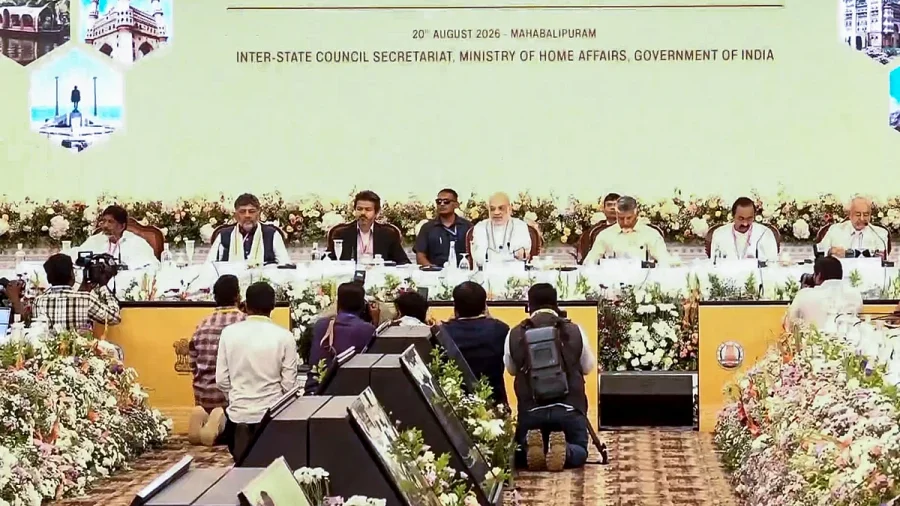
Union Home Minister Amit Shah chaired the 31st meeting of the Southern Zonal Council in Kovalam near Chennai, where Karnataka Deputy Chief Minister DK Shivakumar raised concerns over the delimitation process and called for safeguards to protect the political representation of southern states.
Shivakumar's demands on delimitation at Southern Zonal Council
Shivakumar urged the council to adopt a resolution asking the Union government to use the 1971 Census as the basis for delimitation. He also demanded that the Lok Sabha's existing strength of 543 seats be retained for the next 25 years, with women's reservation accommodated within those seats.
According to Hindustan Times, Shivakumar argued that southern states should not be penalised for successfully implementing population-control measures.
"We welcome the assurance that no southern state will lose seats. But representation is not only about numbers." — DK Shivakumar, Karnataka Deputy Chief Minister
Cauvery water row and other agenda items at the council meet
The Cauvery water dispute was also on the agenda at the meeting, which brought together representatives from five southern states. According to The Federal, Karnataka, Kerala, and Andhra Pradesh Chief Ministers attended the Southern Zonal Council, along with Puducherry representatives.
The delimitation exercise, which is set to follow the 2025 Census, has raised concerns that southern states may lose representation in Parliament, according to India Today.
Why southern states are worried about delimitation
The core issue is simple: southern states have successfully controlled population growth, while northern states have not. If parliamentary seats are reallocated based on population, southern states stand to lose seats they currently hold.
Shivakumar's proposal to use the 1971 Census as the base would freeze the current distribution of seats, protecting southern states from losing representation. His demand to keep the Lok Sabha at 543 seats for 25 years would also provide long-term stability.
The meeting was chaired by Amit Shah, who leads the Southern Zonal Council, a forum designed to address inter-state issues and promote cooperation among southern states.
Our Take: Delimitation fears are legitimate, but solutions need consensus
To put it plainly, the southern states have a legitimate grievance. They followed the national policy on population control, and now they fear being punished for it. That is not just a political problem — it is a fairness problem.
Shivakumar's proposal to use the 1971 Census as the base is a reasonable starting point for discussion. Freezing the Lok Sabha at 543 seats for 25 years would give the country time to address the population imbalance without penalising states that did the right thing.
However, this is not a simple issue. Northern states will argue that representation should reflect current population realities. The Union government will need to find a middle ground that respects both demographic fairness and the principle that states should not be punished for good governance.
The fact that these issues were raised at the Southern Zonal Council — a forum meant for cooperation — shows how serious the southern states are about this. They are not just asking for a discussion; they are asking for a resolution. The ball is now in the Union government's court.