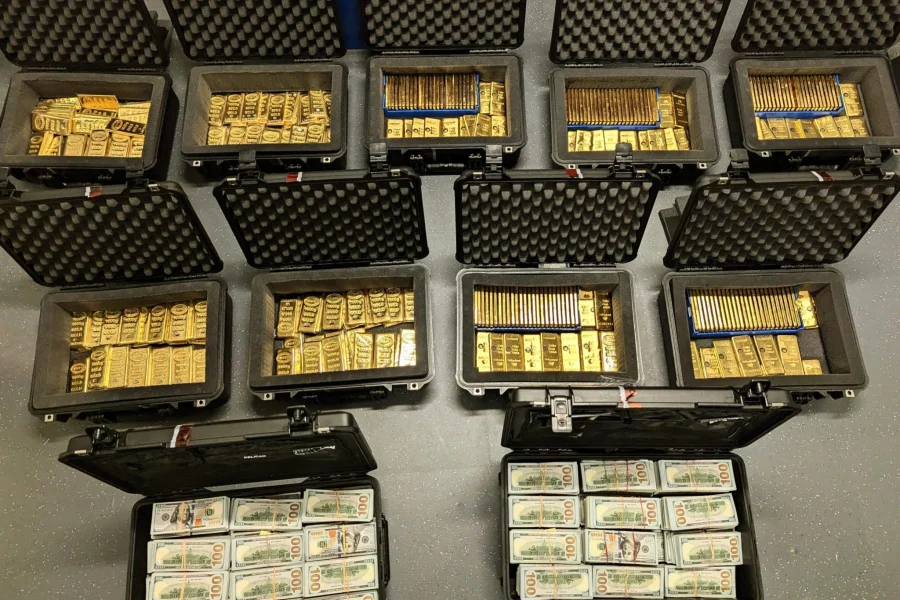

A former senior federal official has admitted to one of the largest frauds against the U.S. government. David J. Rush of Ashburn, Virginia, pleaded guilty to wire fraud after defrauding the government of about $194 million. He used invented classified programs to fund a lavish lifestyle that included 298 gold bars, four luxury South Florida properties, watches, and two BMWs.
Rush held senior executive posts and a TS/SCI clearance — the highest level of security clearance — at an agency referred to in court filings as "Government Agency 1." He pleaded guilty in federal court in Alexandria after reaching a tentative plea deal in September.
How the $194 Million Fraud Worked
Rush created fake classified programs to pull money from the government. Court documents show the fraud caused $193.6 million in losses. He also billed the government $1.8 million for private charter flights.
Under the final plea agreement, Rush owes at least $195.4 million in restitution. That is more than the total fraud amount, covering the losses plus additional costs.
CIA Director John Ratcliffe said the CIA referred the case to authorities. This detail matters because it shows the agency itself flagged the misconduct rather than waiting for an outside audit to catch it.
What Rush Bought With the Stolen Money
The scale of Rush's spending is striking. According to the original story, he used the stolen funds to buy:
- 298 gold bars — a clear attempt to convert stolen money into hard assets
- Four luxury properties in South Florida — a high-value real estate market
- Watches — luxury timepieces often used to store value
- Two BMW vehicles — high-end cars
- $1.8 million in private charter flights billed directly to the government
The mix of assets — gold, real estate, watches, and cars — suggests Rush knew he was handling money that could be traced. Gold and property are common ways people try to hide the source of funds.
Why This Case Matters for Government Oversight
Rush was not a low-level employee. He held senior executive posts and had Top Secret/SCI clearance. That means he was trusted with the nation's most sensitive information. Instead, he used his position to invent fake programs and steal nearly $200 million.
The fact that he operated for as long as he did raises serious questions. How did no one notice $194 million going out the door? The CIA's own referral of the case suggests internal checks eventually worked — but only after massive losses.
Our Take: A Trust Breakdown at the Highest Level
To put it plainly, this is not just a fraud story. It is a story about how a single person with top-level clearance can exploit the system for years. Rush did not hack anything. He did not need to. He simply created fake programs and signed off on them.
In our view, the real issue is oversight. If someone with TS/SCI clearance can invent classified programs and funnel $194 million into gold bars and Florida real estate, then the checks and balances designed to prevent this failed for a long time. The CIA referring the case is a positive sign, but it also means the fraud was caught internally — not by an outside auditor or an independent watchdog.
For readers, the takeaway is simple: even the most trusted officials can break the law. The system needs stronger, independent checks on how classified funds are spent. Trust alone is not enough. Rush's guilty plea closes one chapter, but the questions about how he got away with it for so long remain open.
The plea deal means Rush avoids a trial, but he still faces a massive restitution bill — at least $195.4 million. Whether he can actually pay that back is another question. The gold bars, properties, watches, and cars will likely be seized, but they may not cover the full amount.
What happens next will depend on sentencing. But the damage to public trust is already done. A man with Top Secret clearance admitted to stealing nearly $200 million from the government he swore to serve.