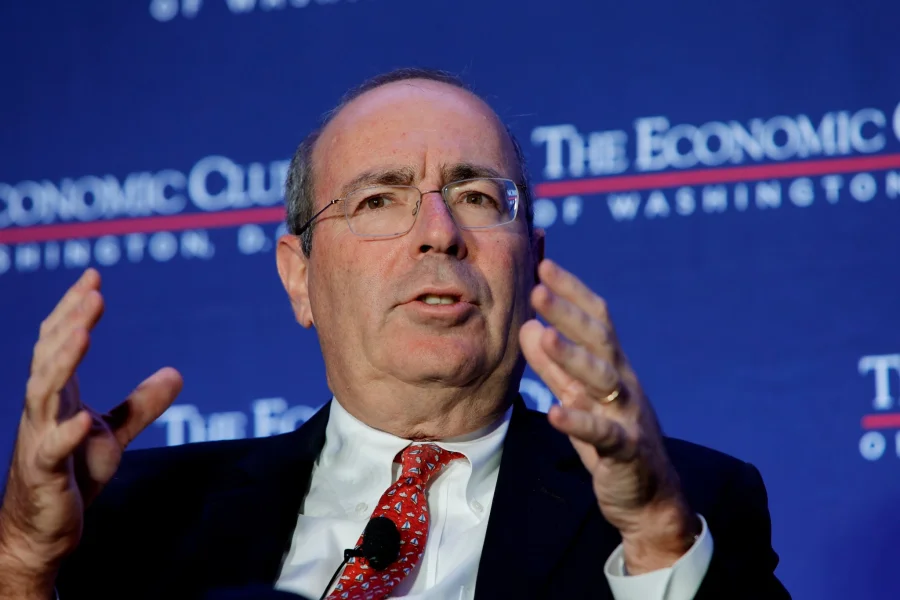

Richmond Fed President and CEO Tom Barkin says the "AI Apocalypse" hasn't arrived. Barkin, a former McKinsey CFO, made the comment during a conversation with Barbara Humpton, CEO of USA Rare Earth, at an Economic Club of Washington, D.C., event.
His message was simple: the forces pushing up inflation are proving harder to shake than expected. And the Fed has responded by raising interest rates for the first time since mid-2023.
Tom Barkin: Why Inflation Is Still Sticking Around
Barkin named three main forces keeping inflation high. They are persistent tariff costs, higher gasoline prices, and a huge wave of AI investment that is pushing up prices for some technology equipment.
Six months ago, he said, it was easier to argue that inflation's persistence was temporary. Back then, the thinking was that oil prices, tariffs and the AI buildout would eventually "morph" away.
That argument is now harder to make. As Barkin put it:
"If inflation's not going to come down relatively quickly, then you have to look in the mirror and say inflatio..."
What the AI Investment Wave Means for Prices
The AI buildout is not just a technology story. According to Barkin, it is also an inflation story. The massive spending on AI is driving up prices for some technology equipment.
This is where the "AI Apocalypse" idea comes in. Some people worry that AI will disrupt jobs and the economy in dramatic ways. Barkin's point is that this dramatic scenario has not shown up yet. What has shown up instead is something more ordinary but still important: AI spending is adding pressure to prices.
- Tariff costs are not fading as fast as expected
- Gasoline prices remain a factor pushing inflation up
- AI investment is raising prices for some tech equipment
- The Fed raised rates for the first time since mid-2023
Our Take: What This Means for You
To put it plainly, Barkin is telling us two things. First, the scary version of AI — the "apocalypse" — is not here. Second, the real, quieter effect of AI is already here, and it is showing up in prices.
In our view, this is a useful reality check. The AI debate often swings between hype and fear. Barkin is pointing at something in between: AI is a real economic force, but it is acting more like a cost driver right now than a job-destroying wave.
For readers, the practical takeaway is about interest rates. If tariffs, gas prices and AI spending keep inflation up, the Fed has less room to cut rates. That affects loans, credit cards and mortgages. The "AI Apocalypse" may not have arrived, but its price tag is already part of the inflation story.