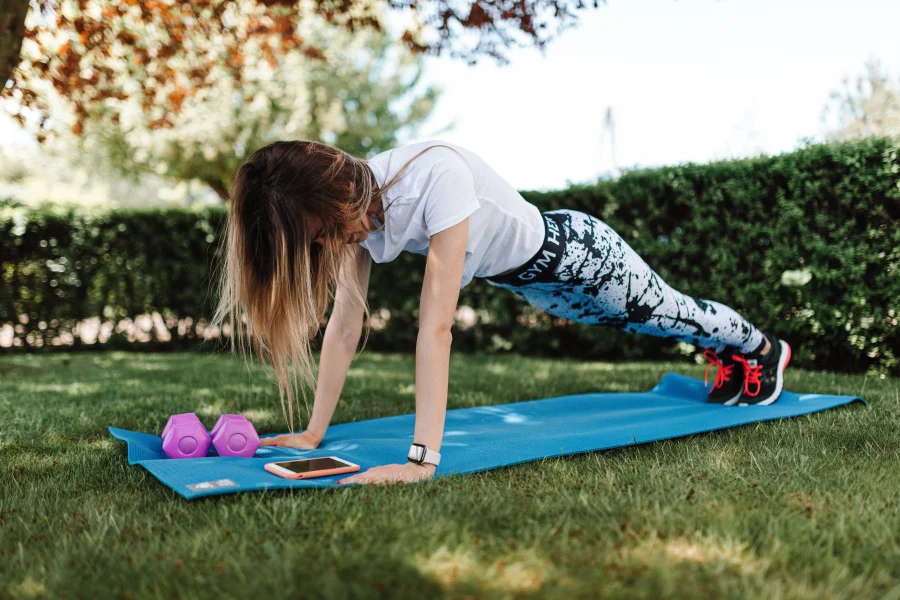

You do not need a commercial gym in your backyard to train well at home. A useful outdoor training area only needs three things: enough room to move, a stable place to train, and a way to keep your equipment usable when the weather changes. That is the core idea behind designing a home workout space that actually works.
The smartest first step is often no purchase at all. Before you buy anything, mark out the movements you actually plan to do, then design the space around them. This guide walks through the decisions that matter most: location, surface, equipment, weather protection and upkeep. It works whether you have room for a squat stand or only a mat and a pair of dumbbells.
Start With Your Training, Not the Equipment
Most people buy gear first and figure out the space later. That is backwards. The original guidance is clear: start with the training, not the equipment. Walk through your planned workout and mark where your body and gear will go. Once you know the movements, the layout becomes obvious — and you avoid buying things that do not fit.
Choose a Location You Will Actually Use
A training area only works if you show up to it. Pick a spot you will genuinely use, not one that is convenient to set up but easy to avoid. Location is listed as one of the core decisions in the guide, alongside surface, equipment, weather protection and upkeep.
Match the Surface to Your Workout
Flooring is not a small detail. The surface should match the workout you plan to do. A stable place to train is one of the three basic requirements of any outdoor area, so the ground under you matters as much as the gear on it.
Arrange the Area for Safe Movement
Once the location and surface are set, arrange the space so you can move safely. The guide lists arranging the area for safe movement as its own step. Give yourself enough room to move without tripping over equipment or running into walls and fences.
Plan for Sun, Rain and Storage
Outdoor gear takes a beating. The guide treats sun, rain and storage as a planning step, not an afterthought. The goal is simple: keep equipment usable when the weather changes. Plan where things live when they are not in use, and how you will protect them from the elements.
Build in Stages and Maintain It
You do not have to build the whole area at once. The final step in the guide is to build in stages and maintain the space. Start with what you need, add as you go, and keep up with upkeep so the area stays usable.
Our Take: Plan First, Buy Later
In our view, the most valuable line in this guidance is the one about the smartest first purchase being no purchase at all. Too many home gyms start with a shopping cart and end with clutter. Marking out your movements first costs nothing and saves money.
To put it plainly: your outdoor training area should be built around your body and your habits, not around a product page. Get the layout and surface right, protect your gear from the weather, and build slowly. That approach works whether your space holds a squat stand or just a mat and a pair of dumbbells.