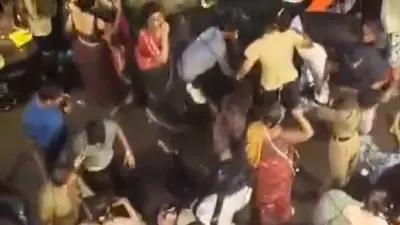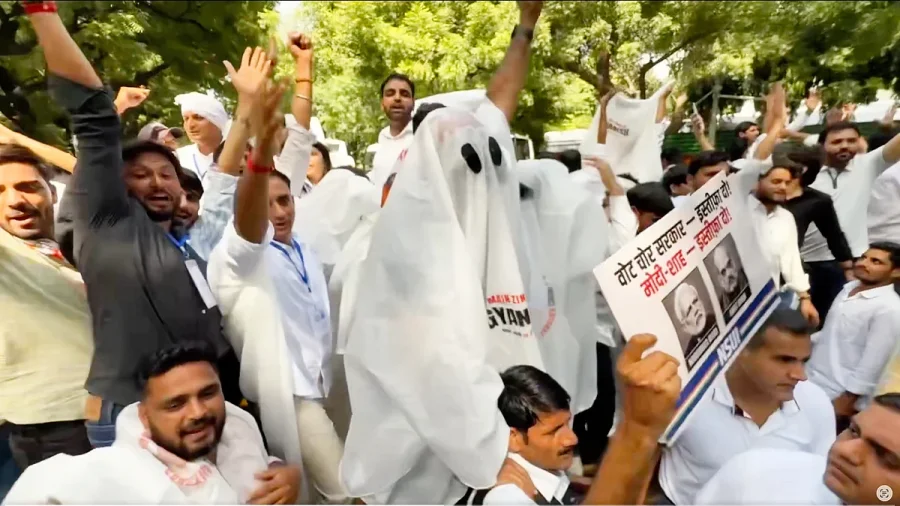

Workers from the Indian Youth Congress (IYC) staged a unique protest in Delhi. They dressed as 'living ghosts' to demand the resignation of the Chief Election Commissioner, Gyanesh Kumar. The protest is about alleged problems with the country's electoral rolls.
Why the 'Living Ghosts' Protest?
The IYC chose a powerful symbol for their demonstration. The protesters wore black robes and white masks, with skulls hanging around their necks. This imagery of 'living ghosts' was used to represent voters who they claim have been wrongly removed from the electoral rolls. The youth wing alleges that these voters are being treated as if they are dead.
The protest was led by Uday Bhanu Chib. The workers attempted to march towards Jantar Mantar but were stopped by the police. The IYC said that some of their workers were detained during the protest.
The Core Allegations and Demands
The central demand of the protest is the resignation of CEC Gyanesh Kumar. The IYC has accused him of overseeing irregularities in the electoral roll process. They allege that living voters have been removed from the lists. The youth wing also accused the BJP of influencing this exercise.
To put it plainly, the IYC is using this protest to highlight what they see as a serious threat to the democratic process. Their choice of the 'living ghosts' theme is a direct and visual way of saying that legitimate voters are being disenfranchised.
Our Take: A Stark Symbol of Voter Concerns
In our view, the 'living ghosts' protest is more than just a creative demonstration. It is a stark and effective way to draw attention to a critical issue. The allegation that living voters are being removed from electoral rolls is a serious one. If true, it strikes at the very heart of a functioning democracy.
The use of such a powerful visual metaphor ensures the message cannot be easily ignored. It forces a conversation about the integrity of the voter list. While the protest was stopped and some were detained, the image of 'living ghosts' demanding their right to vote will likely linger in the public memory. This news matters because it raises fundamental questions about who gets to participate in elections and whether the system is fair to all citizens.