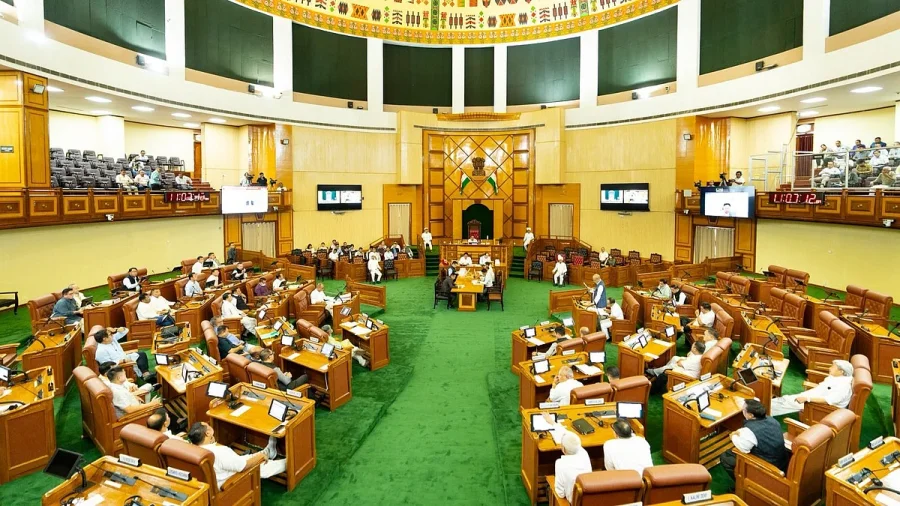

Two Kuki-Zo legislators attended the Manipur Legislative Assembly session in person on Wednesday for the first time in more than three years. The move signals a tentative step towards political engagement between communities divided by the state's prolonged ethnic conflict.
Saitu MLA Haokholet Kipgen and Saikul MLA Kimneo Haokip Hangshing were physically present in the House as the eighth session of the 12th Manipur Legislative Assembly began in Imphal on Wednesday.
Return after years of absence from Manipur Assembly
Their return to the assembly comes more than three years after ethnic violence erupted between the Meitei and Kuki-Zo communities on 3 May, 2023. Since then, most Kuki-Zo legislators have largely stayed away from assembly proceedings in Imphal and have rarely travelled to the valley.
The physical presence of these two legislators in the assembly chamber marks a notable shift. For over three years, the absence of Kuki-Zo MLAs from the House had been a visible sign of the deep divide caused by the conflict.
What this means for political engagement in Manipur
The attendance of Kipgen and Hangshing is being seen as a tentative step towards renewed political engagement. It brings elected representatives from the Kuki-Zo community back into the formal legislative process in Imphal, the state capital located in the valley.
This development comes against the backdrop of a conflict that has kept communities apart and disrupted normal political participation. The decision by these two MLAs to attend the session in person could open the door for broader dialogue and participation in the days ahead.
Our Take: A small but meaningful step
To put it plainly, this is a small but meaningful step. The presence of two Kuki-Zo MLAs in the Manipur Assembly does not resolve the underlying conflict, but it does restore a basic channel of political engagement that had been broken for more than three years.
When elected representatives from a community stay away from the legislature, their voices are absent from formal decision-making. Their return — even if partial — allows for direct participation in debates and discussions that shape the state's future.
The fact that this happened in person matters. It means these legislators travelled to Imphal and sat in the House, something they had not done since the violence began. Whether this leads to broader participation by other Kuki-Zo MLAs remains to be seen, but it is a start worth noting.
For the people of Manipur, this is a reminder that political engagement can resume even after deep fractures. It is not an end to the conflict, but it is a step in the right direction.