
Summary
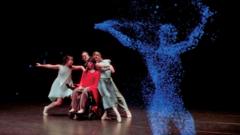
Breanna Olson, a professional dancer who was forced to stop performing due to Motor Neurone Disease (MND), has made a return to the stage. She achieved this by using a digital avatar that she controls with her own brainwaves. This new technology allows her to move a virtual version of herself even though her physical body can no longer dance. This event shows how modern science can help people with severe physical limits find new ways to express their creativity and stay connected to their passions.
Main Impact
The main impact of this development is the emotional and creative freedom it gives to people living with paralysis. For many artists, losing the ability to move feels like losing their voice. By using a brain-computer interface, Olson has shown that the mind can still create art even when the body is weak. This breakthrough moves beyond simple medical help and focuses on the quality of life and the human need for self-expression. It offers hope to thousands of people who feel trapped by their physical conditions.
Key Details
What Happened
Breanna Olson took part in a special performance where she wore a headset equipped with advanced sensors. These sensors are designed to read the electrical signals produced by her brain. When she thought about specific dance movements, the computer translated those thoughts into actions for a digital character shown on a large screen. This allowed her to perform a choreographed routine in front of a live audience. The digital avatar moved with the grace and fluid motion that Olson used to have before her illness progressed.
Important Numbers and Facts
Motor Neurone Disease is a condition that affects the nerves in the brain and spinal cord. It leads to muscle wasting and the loss of the ability to move, speak, and eventually breathe. In Olson's case, the disease had taken away her ability to use her limbs for dancing. The technology used in this performance is known as a Brain-Computer Interface (BCI). It works by tracking brain activity and turning it into digital data. While this technology has been used for basic tasks like moving a computer mouse, using it for complex artistic movements like dance is a significant step forward.
Background and Context
To understand why this matters, it is important to know how MND works. The disease cuts off the communication lines between the brain and the muscles. While the body stops working, the person’s mind usually stays very sharp. This can lead to a feeling of being "locked in." For a dancer like Olson, whose life was built around movement, this loss was especially hard. In the past, there were very few ways for people in this situation to participate in physical arts. This project was created to bridge that gap and prove that a physical disability does not have to be the end of a creative career.
Public or Industry Reaction
The reaction to the performance has been very positive. Olson herself explained that the technology helped her feel a sense of expression that she thought was gone forever. She described it as a way to re-establish the connection she felt with her art and her audience. Experts in the tech world are looking at this as a successful test of how brainwave sensors can be used for more than just medical treatment. Audience members were moved by the sight of a person using their mind to overcome physical barriers, calling it a powerful example of human strength and modern progress.
What This Means Going Forward
Looking ahead, this technology could change the lives of many people with disabilities. It is not just for dancers; it could be used by painters, musicians, or anyone who needs to communicate through movement. There are still some hurdles to clear, such as making the equipment smaller and easier to use at home. It also takes a lot of practice for a person to train their brain to control an avatar accurately. However, as the software gets better, we may see more people using digital versions of themselves to work, play, and stay active in their communities.
Final Take
This story shows that technology is at its best when it serves the human spirit. By turning thoughts into movement, science has given a dancer her stage back. It proves that even when a disease takes away physical strength, it cannot take away the desire to create. This performance is a clear sign that the future of accessibility will be about much more than just basic survival; it will be about giving everyone the chance to share their unique gifts with the world.
Frequently Asked Questions
How does the brainwave technology work?
The user wears a headset with sensors that pick up electrical signals from the brain. A computer then reads these signals and turns them into commands that move a digital character on a screen.
What is Motor Neurone Disease (MND)?
MND is a disease that attacks the nerves that control movement. Over time, it makes it difficult or impossible for a person to move their muscles, though their mind often remains fully functional.
Can this technology be used for things other than dancing?
Yes. This type of technology can be used for communication, controlling wheelchairs, or even creating other types of art like digital painting or music.