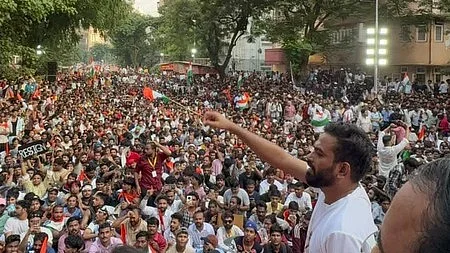

Mumbai Police have registered a case against members and supporters of the Cockroach Janta Party (CJP) over an allegedly unauthorised gathering at Shivaji Park. The case relates to a protest held at the ground during which the crowd demanded the resignation of Chief Election Commissioner Gyanesh Kumar.
According to the police, around 400–500 people assembled near Gate No. 6 of the grounds, opposite the Meenatai Thackeray Memorial in Dadar West. The gathering took place between 4 pm and 7 pm. Police said the group raised slogans and used loudspeakers without permission.
What the Shivaji Park Protest Was About
The event was part of a 'Jail Bharo' protest held on Friday. The protest called for the resignation of Chief Election Commissioner Gyanesh Kumar. The demonstration also drew support from actors and other public figures, according to the original report.
The police case was registered on Saturday, a day after the gathering took place. The complaint centres on the gathering being held without the required permission, along with the use of loudspeakers and sloganeering at the site.
Why the Case Matters
Shivaji Park is a well-known public ground in Mumbai, and gatherings there require official permission. When a crowd assembles without clearance, police typically treat it as a violation of assembly rules. In this instance, the police have pointed to three specific issues:
- The assembly of around 400–500 people near Gate No. 6 without permission
- The raising of slogans at the site
- The use of loudspeakers without authorisation
The case has been filed against CJP members and supporters. The protest itself was political in nature, aimed at the Chief Election Commissioner, but the police action is focused on how the gathering was conducted rather than the demand it raised.
Our Take: Permission Rules Apply to Everyone
To put it plainly, this case is not about whether people have the right to protest. They do. The issue is whether a public ground like Shivaji Park can be occupied by hundreds of people without taking permission from the authorities.
In our view, the police are on solid ground here. If a crowd of 400–500 people gathers at a prominent location, uses loudspeakers and raises slogans without clearance, the law treats that as a violation — regardless of which party or cause is behind it. The same rule would apply to any group.
What readers should take away is simple: the right to protest and the requirement to seek permission are not in conflict. Both can exist together. The CJP supporters made their demand heard, but if they skipped the permission process, they now face the legal consequences. That is how the system is meant to work — for everyone, equally.
The bigger question is whether political protests in Mumbai will now see tighter scrutiny at public grounds. If police act firmly in this case, other groups planning similar gatherings may think twice before assembling without approval.