

Summary
The Special Area Development Authority (SADA) has changed the rules for vehicle entry at the Kasol barrier in Himachal Pradesh. For the first time since 2021, vehicles registered within the state of Himachal Pradesh are no longer exempt from paying entry fees. This decision has caused significant tension in the Manikaran valley, leading to protests from local residents and political groups who believe the new charges are unfair. While the government claims the money is needed for local development, many people are questioning where the previously collected funds have been spent.
Main Impact
The most immediate impact of this decision is the increased cost for travelers and transport workers from across Himachal Pradesh. Previously, only tourists from other states had to pay to enter the popular areas of Kasol and Manikaran. Now, almost every vehicle entering the zone must pay a fee, except for those from the local districts of Kullu and Lahaul-Spiti. This change has led to heated arguments at the toll barrier and a growing sense of frustration among the public who feel that the state government is adding an unnecessary financial burden on its own citizens.
Key Details
What Happened
On May 13, the SADA barrier at Kasol began enforcing a new fee structure. This ended a policy that had been in place for nearly three years. When the barrier was first set up in July 2021, the district administration decided that only vehicles from outside Himachal Pradesh would be charged. The idea was to collect money from tourists to help keep the area clean and protect the environment. However, the new rules have removed this protection for state-registered vehicles, requiring them to pay every time they pass through the barrier to reach the Manikaran valley.
Important Numbers and Facts
The revised fee structure is based on the type of vehicle and its seating capacity. Two-wheelers are now charged Rs 50, while taxis must pay Rs 150. For larger vehicles like SUVs and other commercial transport, the fee is set at Rs 300. State-registered vehicles that can carry up to 13 passengers are charged Rs 400. The highest fee of Rs 500 applies to all buses and trucks with more than 13 seats. It is important to note that vehicles with registration numbers from Kullu and Lahaul-Spiti districts are the only ones that remain exempt from these new charges.
Background and Context
The Manikaran valley is one of the most visited parts of Himachal Pradesh. It is famous for its natural beauty and religious sites, which draw thousands of visitors every week. Because of this high number of visitors, the region faces serious problems with garbage and sewage. The Special Area Development Authority was created to manage these issues. The money collected at the Kasol barrier is supposed to be used for scientific waste disposal and building sewage treatment plants. The goal is to ensure that tourism does not destroy the local environment. However, managing the balance between collecting revenue and keeping the local population happy has proven to be a difficult task for the administration.
Public or Industry Reaction
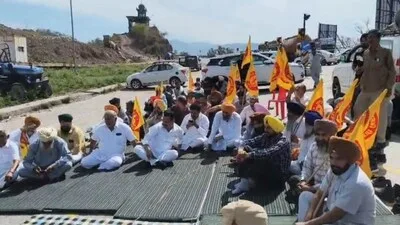
The reaction to the new fees has been largely negative. As soon as the rules were implemented, drivers began arguing with the staff at the barrier. Political tension also increased quickly. Members of the BJP, led by Manikaran Mandal president Sanju Pandit, organized a protest at the site. The protesters claim that the government has already collected millions of rupees over the last few years, but the local infrastructure has not improved. They specifically pointed to the Bhuntar-Manikaran road, which they describe as being in terrible condition. They argue that until the existing roads are fixed, the government has no right to ask for more money from the people.
What This Means Going Forward
The situation at the Kasol barrier remains unstable. SADA Chairman and local MLA Sunder Singh Thakur has defended the new fees, stating that the money will go directly toward the development of the Kasol and Manikaran panchayats. He believes this revenue is essential for the long-term health of the valley. However, if the protests continue, the administration may face pressure to reconsider the fees or provide more transparency regarding how the money is used. For now, travelers should be prepared to pay the new rates when entering the area. The success of this policy will likely depend on whether the government can show real improvements in local roads and waste management in the coming months.
Final Take
The decision to charge Himachal Pradesh vehicles at the Kasol barrier highlights the ongoing struggle to fund environmental protection in high-traffic tourist zones. While the need for better waste management is clear, the lack of visible progress on local roads has made the public skeptical. For the new fee system to be accepted, the authorities must prove that the money is being spent wisely to benefit both the environment and the people who live and work in the valley.
Frequently Asked Questions
Which vehicles are exempt from the Kasol barrier fee?
Only vehicles registered in the Kullu and Lahaul-Spiti districts are currently exempt from paying the fee at the SADA barrier.
How much do cars and taxis have to pay under the new rules?
Taxis are charged Rs 150, while SUVs and other commercial vehicles are required to pay Rs 300 per entry.
Why was the fee collection started in the first place?
The fees were introduced to raise money for essential environmental services, such as scientific garbage disposal and sewage treatment, to protect the ecology of the Manikaran valley.
photo courtsy : google photos