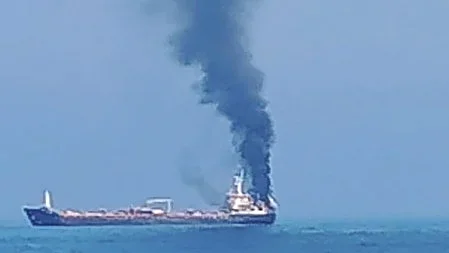

Five Indian nationals were rescued after a projectile struck the Kuwait-flagged tanker MT Kazimah III in the Strait of Hormuz. The Ministry of External Affairs (MEA) confirmed the rescue on Saturday.
India's Embassy in Oman said it coordinated the rescue operation from the vessel earlier in the day. All five Indians were brought safely ashore.
How the Rescue of Indian Sailors Unfolded in the Strait of Hormuz
The embassy said it worked with local authorities to get the Indian crew members off the tanker and to safety. The mission thanked Omani authorities for their assistance in the operation.
The MEA also confirmed the rescue in a separate post on X, repeating that the five Indians were safe.
Why This Strait of Hormuz Tanker Incident Matters for Indian Seafarers
The Strait of Hormuz is a key route for global shipping, and Indian sailors work on many vessels that pass through it. This means incidents in these waters directly affect Indian families and workers.
This is not the first such incident. An attack off Oman last month killed one Indian seafarer and left 19 others needing rescue. That earlier event shows the risk Indian crew members face on these routes.
- Five Indians were on board the Kuwait-flagged tanker MT Kazimah III when it was hit.
- The rescue was coordinated by India's Embassy in Oman.
- All five were brought safely ashore.
- Omani authorities helped with the operation and were thanked by the embassy.
Our Take: Rescue Is a Relief, But the Risk Remains
The safe return of five Indian sailors is good news, and the embassy and Omani authorities deserve credit for acting quickly. To put it plainly, this is what a working rescue system should look like — fast coordination, clear confirmation, and everyone home safe.
But in our view, the bigger point is harder to ignore. This is the second serious incident involving Indian seafarers in the same region in a short span. Last month's attack off Oman killed one Indian and left 19 needing rescue. Now a projectile has hit another tanker in the Strait of Hormuz.
Indian sailors keep working on ships that pass through these dangerous waters because global trade depends on them. The government can rescue them after an attack, but it should also be clear about what it is doing to protect them before one happens. Families of seafarers deserve that answer.
For now, five families can breathe easy. That is worth something. But the pattern of attacks in this region is a warning that should not be treated as routine.