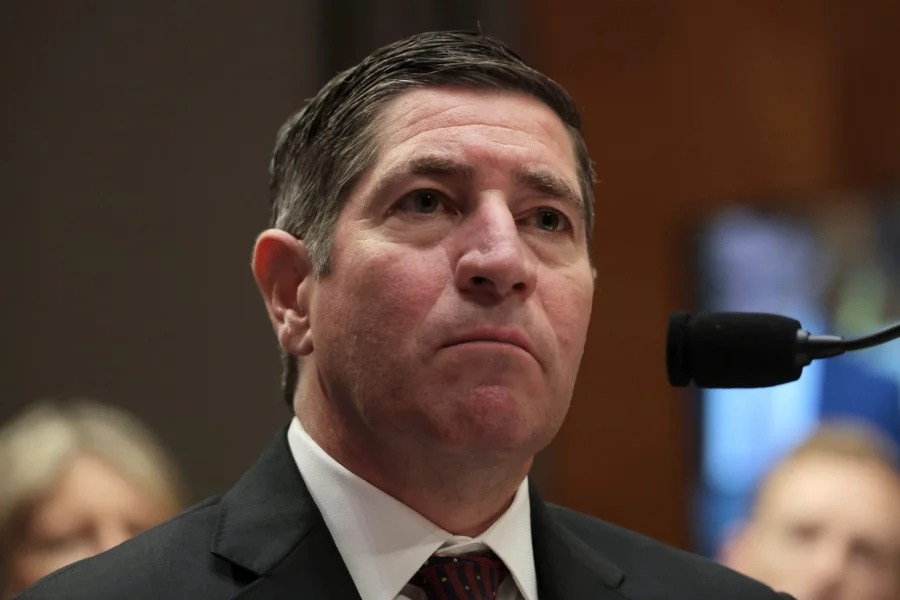

The man leading President Donald Trump's return-to-office charge for government workers has been caught in an embarrassing contradiction. Scott Kupor, the Director of the Office of Personnel Management (OPM), admitted in a hot mic moment that he filmed a video in front of a blank wall while working from home — specifically to avoid suspicion about his location.
According to Fortune, the admission came during an audio recording of an Aug. 18 all-hands agency meeting that the outlet exclusively reviewed. In the recording, Kupor asks OPM communications team member Kiki Nyoh whether his most recent "Federal Friday" video — a periodic series where Kupor offers agency updates on social media — looked as if he was "stuck in a jail cell."
Kupor's Hot Mic Admission About Working From Home
The irony is hard to miss. Kupor is the key driver of Trump's return-to-office agenda, pushing federal workers back to physical workplaces. Yet the recording reveals he was filming from his bedroom, trying to make it look otherwise.
"I was in my bedroom, but I was trying to find—because I knew someone was..." Kupor said, before trailing off, according to the Fortune report. A source confirmed to Fortune that it was Kupor who made the remarks.
"I was in my bedroom, but I was trying to find—because I knew someone was..." — Scott Kupor, via Fortune
The blank wall was a deliberate choice. Kupor wanted to avoid any visual clue that he was working from home, fearing blowback over his location. The admission stands in sharp contrast to the policy he champions for thousands of federal employees.
What This Means for the Return-to-Office Debate
This revelation cuts to the heart of the return-to-office debate. The person enforcing strict in-person attendance rules for government workers apparently felt the need to hide his own remote work. It raises questions about whether the policy is about productivity or perception.
The "Federal Friday" video series is meant to be a transparent update from the agency. Instead, this particular episode involved staging a scene to conceal the truth. For federal workers being ordered back to offices, the message seems to be: do as I say, not as I do.
Our Take: A Double Standard That Undermines the Policy
To put it plainly, this is a bad look for the return-to-office movement. If the person leading the charge believes working from home is something to hide, it suggests he knows remote work is effective — or at least that it carries a stigma he wants to avoid.
The blank wall trick is not just a minor embarrassment. It undermines the entire rationale for forcing workers back. If Kupor felt he needed to film against a wall to avoid suspicion, he was implicitly admitting that working from home is something people might judge. That judgment is exactly what he is imposing on federal employees.
In our view, this hot mic moment reveals a double standard. Leaders pushing return-to-office mandates should be willing to follow the same rules they set for others. Instead, this incident shows a leader who wanted the appearance of being in the office without actually being there.
For the thousands of government workers affected by Trump's return-to-office agenda, this story will likely feel validating. It confirms what many have suspected: the push for in-person work may be more about optics than outcomes.
The question now is whether this admission will change anything. Will Kupor address the contradiction publicly? Will it soften the administration's stance? Based on the recording, the man leading the charge was not even willing to let his own video reveal where he was working.
That is not leadership by example. It is leadership by illusion — and the illusion has now been exposed.