

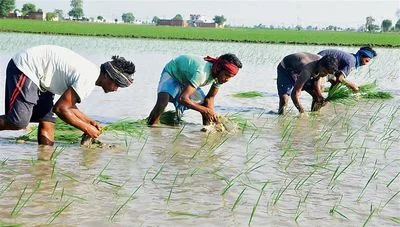

Continuous rainfall over the past three days has brought much-needed relief to paddy farmers across Haryana. The showers have significantly accelerated paddy transplantation after a slow start caused by deficient rainfall in June and fears of an outbreak of the Southern Rice Black-streaked Dwarf Virus (SRBSDV), commonly known as the Fiji or dwarf virus.
Rainfall Accelerates Paddy Transplantation in Haryana
According to officials from the Agriculture and Farmers Welfare Department, the favorable weather has led to a noticeable increase in transplantation activity. Around 15 percent more paddy transplantation has been completed during the last three days due to the continuous rain. As a result, approximately 85 percent of the targeted paddy area in the district has now been covered.
Farmers Encouraged by Favorable Weather
The rains have been a welcome change for farmers who had been waiting for adequate water to begin transplanting. According to The Tribune, the showers have proved to be a boon for the crop. The rainfall has encouraged farmers who were hesitant to start transplantation due to the earlier dry spell and virus concerns.
"This rainfall has encouraged farmers who were waiting for adequate water to begin transplanting paddy. The showers have proved to be a boon for the crop as they have..." — The Tribune
Overcoming Early Season Challenges
The early part of the season had been challenging for paddy farmers. Deficient rainfall in June had slowed down the initial transplantation process. Additionally, there were widespread fears about the Southern Rice Black-streaked Dwarf Virus, which had made farmers cautious about early transplantation. The recent continuous rain has helped overcome these hurdles, allowing farmers to move forward with their planting schedules.
Our Take: A Timely Boost for Haryana's Paddy Farmers
In our view, this continuous rain is exactly what Haryana's paddy farmers needed. After a worrying start to the season marked by dry weather and virus fears, the past three days have turned the situation around. The fact that 85 percent of the targeted area is now covered is a strong sign of recovery. This shows how dependent agriculture still is on natural weather patterns. While the rain has been a blessing, it also highlights the need for better water management and disease prevention strategies to protect farmers from such uncertainties in the future.