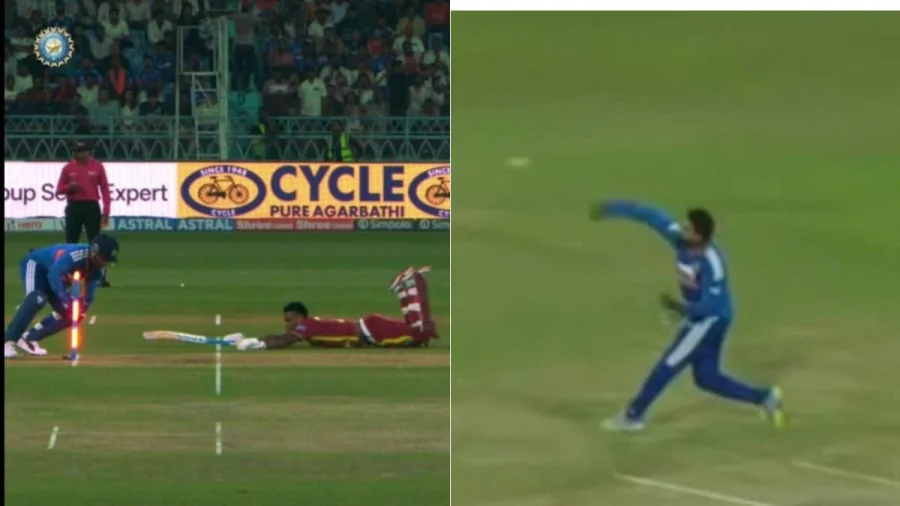

West Indies batter Shimron Hetmyer was run out for just five runs during the powerplay of the first T20I against India in Lucknow. The dismissal happened on the second ball of the sixth over and left Hetmyer furious as he walked back to the pavilion.
The run-out came after a misfield from Axar Patel created a sudden opportunity for India. The ball deflected off Axar's left hand as he dived, and what looked like a routine moment quickly turned into a sharp fielding play.
How the Hetmyer Run Out Happened in Lucknow T20I
Axar Patel was involved in the fielding effort that started the chain of events. The ball deflected off his left hand as he dived and pushed it away, opening up a chance that India's fielders grabbed immediately.
Shreyas Iyer and Sanju Samson combined to complete the run-out, catching Hetmyer short of his crease. The West Indies batter had scored only five runs before the dismissal, adding to the team's troubles in the powerplay.
Why Hetmyer Was Left Furious
Hetmyer's reaction after the run-out made it clear he was not happy with how the dismissal unfolded. The West Indies camp suffered another setback in the powerplay, with one of their key batters back in the pavilion early.
The run-out gave India a strong start in the first T20I of the series. For West Indies, losing Hetmyer cheaply in the sixth over was a blow they did not need.
Our Take: A Sharp Piece of Fielding That Changed the Powerplay
To put it plainly, this run-out was less about luck and more about India's fielders staying alert. A misfield usually gives the batting side a free run, but here Axar Patel's dive turned a half-chance into a real one, and Iyer and Samson finished the job without wasting a moment.
In our view, Hetmyer's frustration is understandable from a batter's point of view. He was beaten not by a great delivery but by quick thinking in the field. Still, that is exactly the kind of pressure India's fielding unit wants to build in this series. For West Indies, the lesson is simple: against this Indian side, even a small misfield can turn into a wicket if you are not paying attention between the wickets.
For readers following the series, this moment is worth remembering. It shows how much T20 cricket now depends on fielding, not just batting and bowling. One dive, one throw, and a set batter is gone for five.