
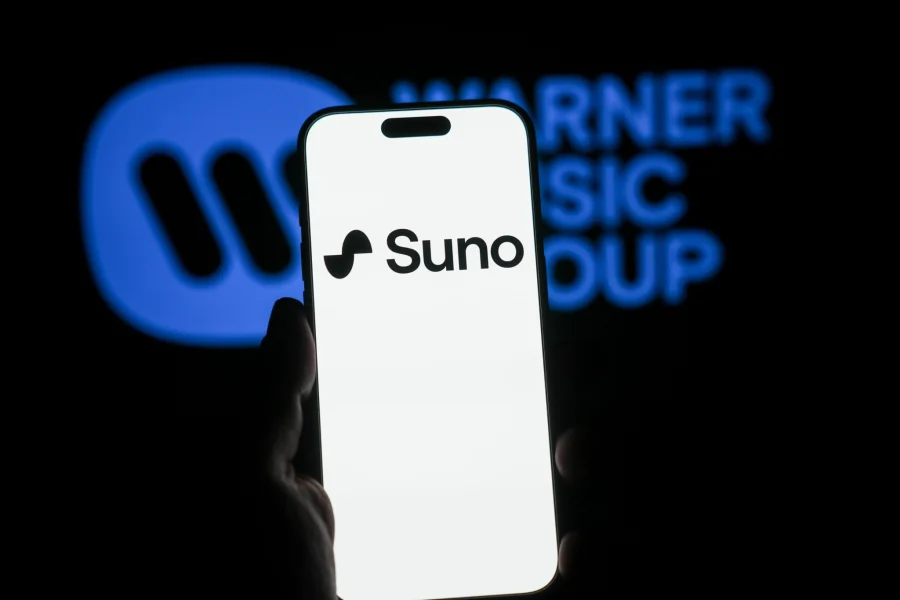

Amy Wu Martin creates AI-generated songs for her son on Suno. She's not famous or getting paid. She just likes it. That, in a nutshell, is why she led Menlo Ventures into a $250 million fundraise for the AI music platform last fall, then re-upped in a $400 million round in June at a $5.4 billion valuation—more than doubling Suno's value in seven months.
What is Suno and Why Are Investors Betting Big?
Suno is a text-to-music platform. Users type a prompt and get a complete song back in seconds. No instruments, no music theory, and no production skills are required. The platform has over 100 million lifetime users, 2 million paying subscribers, and $300 million in annual recurring revenue (ARR). It has been publicly available for less than three years.
According to Bloomberg, Suno Inc. raised $400 million at a valuation of $5.4 billion, signaling strong investor confidence in AI-generated music.
The Thesis: When Creation Costs Drop to Zero
Wu Martin's investment thesis on Suno is about what happens when the cost of creating something drops to zero. She believes that removing barriers to music creation will unlock a massive wave of new artists and content. Her personal use of the platform—making songs for her son—reflects the kind of casual, everyday creativity she thinks will drive Suno's growth.
As reported by EDM Nomad, the $400 million raise at a $5.4 billion valuation is "a huge signal that investors still believe AI generated music is about to reshape the industry." The company is also reportedly preparing a new music model with Amazon Web Services.
What This Means for the Music Industry
The rapid growth of Suno—from zero to $300 million in ARR in under three years—shows that there is real demand for AI-generated music. The platform's 2 million paying subscribers are willing to pay for the ability to create original songs instantly. This challenges traditional music production models and raises questions about copyright, artistry, and the role of human musicians.
According to Reddit's technology community, the funding round has sparked debate about whether AI music platforms like Suno will complement or replace human creativity.
Our Take: A Bet on Democratization, Not Just Technology
In our view, the $5.4 billion valuation is not just about the technology—it is about the shift in who gets to make music. For decades, creating a song required access to instruments, studios, and years of training. Suno removes all of that. Whether you think that is good or bad, the numbers show that millions of people want this.
The risk for investors is clear: the music industry is notoriously litigious, and copyright battles over AI-generated content are already underway. But Wu Martin's bet is that the demand from 100 million users will outweigh the legal challenges. If she is right, Suno could redefine how music is made and consumed. If she is wrong, it is a $5.4 billion lesson in the limits of AI creativity.
Either way, the message is clear: venture capital believes the future of music is AI-powered, and they are putting billions behind that belief.