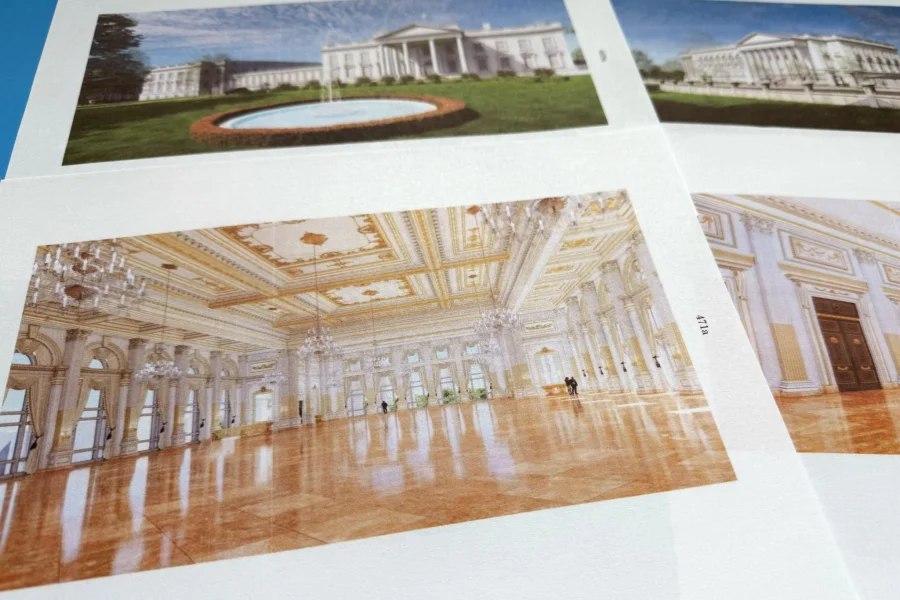

Chief Justice John Roberts has allowed the White House to continue construction on President Donald Trump's $400 million ballroom project for now. The temporary order came as the Supreme Court considers the Trump administration's emergency request to intervene in lawsuits over the project.
The decision arrived just hours before lower-court rulings would have forced a halt to aboveground construction. The lower courts had ruled against the project because Trump did not get congressional approval.
Supreme Court Emergency Order on Trump Ballroom Project
The one-page document does not explain Roberts' reasoning or indicate when another ruling will be handed down. Roberts signed the order because he oversees emergency appeals of cases filed in the capital.
According to PBS News, the order will remain in place until the Supreme Court issues a more durable decision on the matter.
The Trump administration has argued the ballroom is needed for national security purposes, as reported by Al Jazeera.
Ballroom Construction Crews Working Around the Clock
Crews are working 20 hours a day, seven days a week on the project, according to KHQ News. About $200 million in private donations has been spent or committed to the construction effort.
The case tests the limits of presidential authority over White House property and whether congressional approval is required for major construction projects on the executive residence grounds.
"Crews are working 20 hours a day, seven days a week on the project, where about $200 million in private donations has been spent or committed." — KHQ News
Legal Fight Over Congressional Approval for White House Construction
The core legal dispute centers on whether the president needs congressional approval for such a large-scale project. Lower courts had ruled against the administration, prompting the emergency appeal to the Supreme Court.
According to NBC News, the Supreme Court's involvement marks a significant step in the ongoing legal battle over the project's approval process.
The temporary order means construction can continue while the court deliberates. This gives the administration more time to make its case before the full court.
Our Take: What This Means for Presidential Authority
This case raises important questions about the balance of power between the executive branch and Congress. The fact that lower courts ruled against the project suggests there are genuine legal concerns about proceeding without congressional approval.
To put it plainly, allowing construction to continue while the case is pending is a practical decision — halting work mid-project could be costly and disruptive. But the bigger issue remains unresolved: can the president undertake major construction on White House grounds without congressional oversight?
The Supreme Court's eventual decision will set an important precedent. If the administration wins, it could open the door to more executive projects without legislative approval. If it loses, it reinforces Congress's role in approving major government spending and construction.
For now, the crews keep working, and the legal questions remain before the highest court in the land.
Sources & References
- Al Jazeera — US Supreme Court allows Trump's ballroom project to continue for now
- PBS News — Supreme Court chief justice allows work on Trump's $400M White House ballroom to continue for now
- KHQ News — Supreme Court's chief justice allows work on Trump's $400M White House ballroom to continue
- NBC News — Supreme Court and Trump White House ballroom
- KSAT — Supreme Court's chief justice allows work on Trump's $400M White House ballroom to continue for now