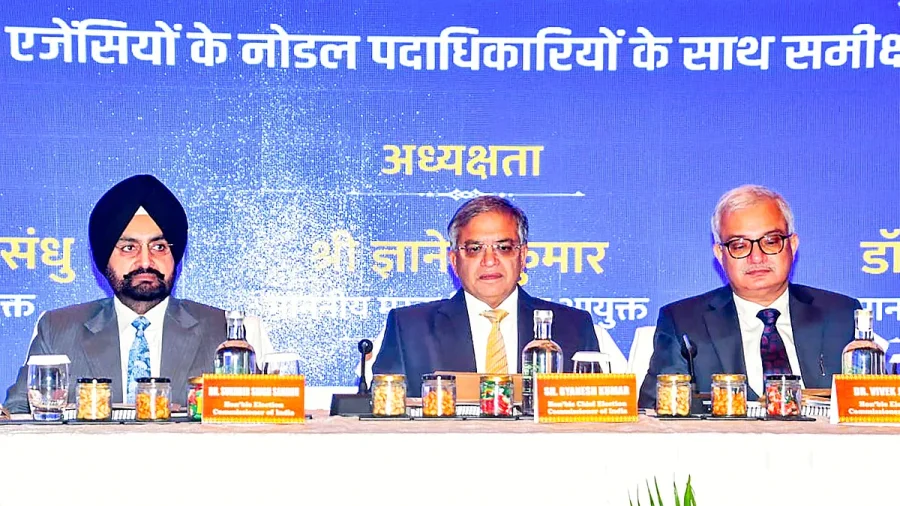

The Supreme Court has agreed to hear a plea that challenges a provision of a 2023 law granting immunity to the Chief Election Commissioner and other election commissioners. The plea was filed by the Association for Democratic Reforms (ADR).
A Bench of Chief Justice Surya Kant and Justices Joymalya Bagchi and V. Mohana issued notice to the Centre and the Election Commission of India. The court has sought their responses on the plea.
What Is Section 16 of the CEC Act, 2023?
The plea challenges Section 16 of the Chief Election Commissioner and Other Election Commissioners (Appointment, Conditions of Service and Term of Office) Act, 2023. This section grants immunity to the CEC and election commissioners for certain acts undertaken during the discharge of their official duties.
Section 16 of the Act states: "Notwithstanding anything contained in any other law for the time being in force..." The provision effectively shields the CEC and election commissioners from legal action for actions taken in their official capacity.
What the Petitioner Wants
The Association for Democratic Reforms has asked the Supreme Court to declare Section 16 of the Act as unconstitutional. The petition argues that this immunity provision is not valid under the law.
The court has agreed to examine this plea. Notice has been issued to both the Centre and the Election Commission of India, meaning both parties must now respond to the petition.
Why This Case Matters
The Election Commission of India is the body that conducts elections in the country. The CEC and election commissioners are its top officials. The question of whether they should have immunity for their official actions is at the heart of this case.
If the court strikes down Section 16, it would mean that the CEC and election commissioners could face legal scrutiny for actions taken during their time in office. If the court upholds the provision, the immunity would continue.
Our Take: Accountability vs. Protection
In our view, this is an important case for Indian democracy. The Election Commission is responsible for conducting free and fair elections. The officials who run this institution hold significant power.
To put it plainly, the question is simple: should the people who oversee elections be completely protected from legal challenges for their official actions? The petitioner argues no. The court will now decide.
This case is not about any single election or any single official. It is about the legal framework that governs how the Election Commission functions. The outcome will affect how the CEC and election commissioners can be held accountable in the future.
For ordinary voters, this matters because the Election Commission is the institution that ensures their vote counts. If the top officials of this body have blanket immunity, it becomes harder to question their decisions. The Supreme Court's decision on this plea will shape that balance.
The court has issued notice and will hear the matter. Both the Centre and the Election Commission of India will present their responses. The case is now in progress.