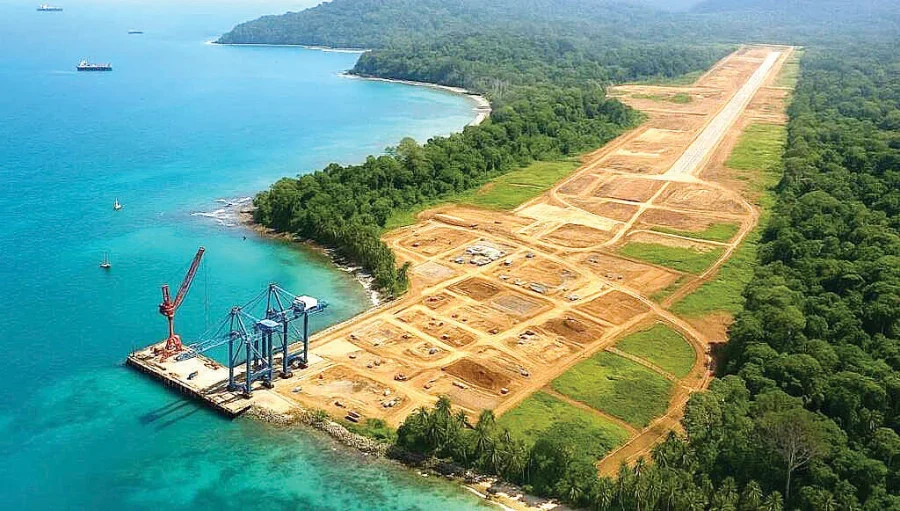

The Supreme Court has refused to stay the proceedings before the Calcutta High Court on petitions challenging the Great Nicobar Island Project. A three-judge Bench headed by Chief Justice of India Surya Kant gave this decision. The Bench also made an important observation — that preservation of culture is a constitutionally protected fundamental right.
The petitions before the Calcutta High Court were filed by former Union Environment Secretary Meena Gupta. She has challenged the project on grounds that it threatens the area's interests. The Supreme Court did not stop the High Court from hearing these petitions. Instead, it urged the Calcutta High Court to hear the case and decide the issues without delay.
Why the Supreme Court Refused to Stay the Calcutta HC Proceedings
The Supreme Court's decision means the Calcutta High Court can continue hearing the petitions against the Great Nicobar Island Project. The Bench, led by Chief Justice Surya Kant, chose not to interfere with the ongoing proceedings. It instead asked the High Court to move forward and decide the matter quickly.
The Court also linked the case to a larger constitutional principle. It said preservation of culture is a constitutionally protected fundamental right. This observation is significant because the petitions raise constitutional issues along with environmental concerns. The Supreme Court has asked the Calcutta High Court to decide these issues, including the constitutional questions, without delay.
What the Petitions Say About the Great Nicobar Island Project
The petitions before the Calcutta High Court were filed by Meena Gupta, a former Union Environment Secretary. She has challenged the Great Nicobar Island Project on the ground that it threatens the area's interests. The case involves constitutional issues, which is why the Supreme Court's observation on cultural preservation matters.
The Supreme Court's refusal to stay the proceedings means the High Court will continue to examine these challenges. The Bench has made it clear that it wants the matter resolved promptly rather than delayed.
Our Take: Why This Ruling Matters for the Great Nicobar Case
In our view, this development is important for two reasons. First, the Supreme Court has made it clear that it will not put the Calcutta High Court's proceedings on hold. This means the legal challenge to the Great Nicobar Island Project will move forward. People who filed the petitions will get their day in court without further delay.
Second, the Supreme Court's observation on culture is a strong statement. By calling the preservation of culture a constitutionally protected fundamental right, the Court has signaled that cultural concerns carry real constitutional weight. This could shape how the Calcutta High Court examines the petitions, especially the constitutional issues involved.
To put it plainly, the Supreme Court has done two things at once. It has refused to stop the High Court from doing its job, and it has reminded everyone that cultural preservation is not a side issue — it is a fundamental right. For readers following the Great Nicobar Island Project, the key takeaway is this: the case is now firmly in the Calcutta High Court's hands, and the Supreme Court wants a decision without delay.
What happens next depends on how the Calcutta High Court handles the petitions. But the Supreme Court's message is clear — the matter should be decided, and it should be decided soon.