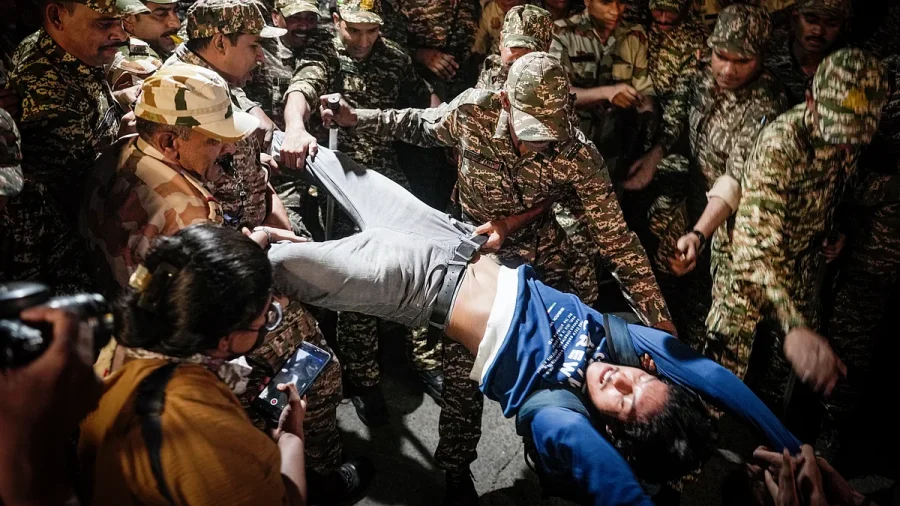

Six US Democratic lawmakers have asked Secretary of State Marco Rubio to raise allegations of excessive force during student protests in Delhi and other parts of India with his Indian counterparts. The group includes Pramila Jayapal, Ilhan Omar, Jim McGovern, Rashida Tlaib, Eleanor Holmes Norton and Jesus Garcia.
The lawmakers also accused the Indian embassy in Washington and Indian consulates in other US cities of surveilling supporters of CJP. India's ambassador has rejected Jayapal's remarks, calling them interference.
What the US Lawmakers Are Asking Rubio to Do
The letter puts two clear demands in front of the Secretary of State. First, the lawmakers want Rubio to question Indian officials about the handling of the CJP protests. Second, they want independent probes into alleged rights violations.
The letter also seeks scrutiny of India's eligibility for US arms sales. That point matters because it links the protest allegations directly to a major area of US-India cooperation.
India's Response to the Allegations
India has pushed back. The country's ambassador rejected Pramila Jayapal's remarks and described them as interference. The original story does not give further details of the ambassador's statement.
The allegation about surveillance of CJP supporters in the US is the sharpest claim in the letter. It targets the Indian embassy in Washington and Indian consulates in other US cities. India has not accepted this charge, based on the ambassador's rejection of Jayapal's remarks.
Why This Letter Matters
This is a letter from six lawmakers, not a change in US policy. But it puts the CJP protest issue in front of the top US diplomat. It also ties the issue to arms sales, which gives the request more weight.
- The letter names six Democratic lawmakers, including Jayapal and Omar
- It asks Rubio to raise alleged police excesses with Indian counterparts
- It accuses Indian diplomatic missions in the US of surveilling CJP supporters
- It seeks independent probes into alleged rights violations
- It asks for scrutiny of India's eligibility for US arms sales
- India's ambassador rejects Jayapal's remarks as interference
Our Take: A Political Signal, Not a Policy Shift
In our view, this letter is best read as a political signal. Six lawmakers signing one letter does not change US-India relations on its own. But it does show that the CJP protests have become a topic US politicians are willing to raise publicly.
To put it plainly, the arms sales angle is the part to watch. Protest allegations alone rarely move policy. When lawmakers question a country's eligibility for US weapons, the pressure becomes harder to ignore.
India's rejection of the remarks as interference is also telling. It shows New Delhi sees this as a political attack, not a rights debate. For readers, the key point is simple: this story is now part of the US-India conversation, and the next move belongs to Rubio's office.