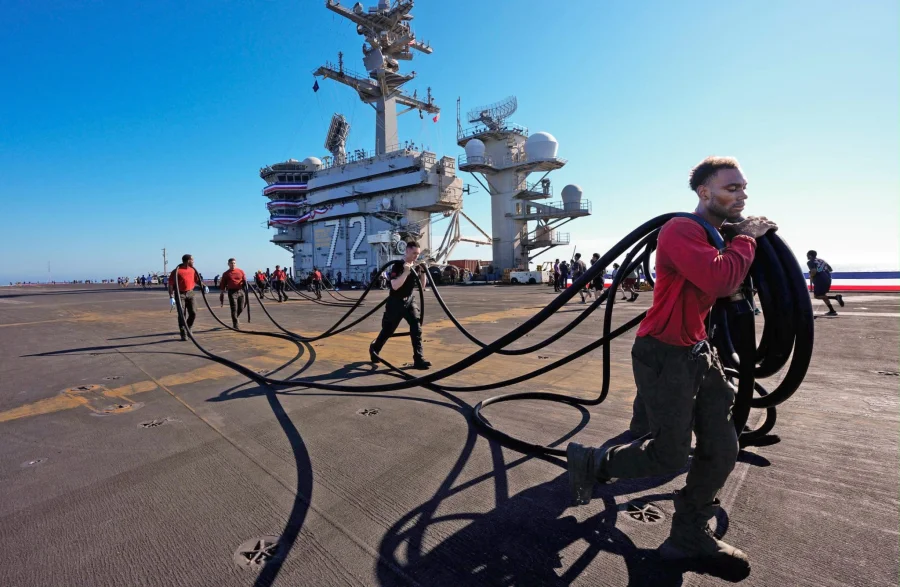

The USS Abraham Lincoln is returning to its home port in San Diego after 265 straight days at sea. The aircraft carrier spent that time supporting the Iran war, making this a record-long deployment for uninterrupted days at sea. The long stretch came with reports of food shortages and deteriorating morale among the crew.
The return home closes out a deployment that drew attention not just for its length, but for the conditions sailors faced on board. Reports of food shortages and low morale raised questions about how the crew was being cared for during such an extended time away from port.
Hegseth Awards Presidential Unit Citation to USS Abraham Lincoln Crew
Defense Secretary Pete Hegseth flew out to the carrier on Wednesday to present the crew with the Presidential Unit Citation. This is the highest honor a unit can receive, and it is typically reserved for significant achievement in combat.
Hegseth also pushed back against criticism of the deployment. He said there were efforts to turn the Lincoln into "some sort of a symbol, a symbol of dysfunction or a symbol of low morale or a symbol of a failed mission."
"What makes the U.S. military and the U.S. Navy and all these sailors different is that you adapt and that you're resilient and you overcome." — Defense Secretary Pete Hegseth
His message focused on the crew's ability to handle hardship. He framed the long deployment and the reported problems as a test the sailors passed, rather than a sign of failure.
What the 265-Day Deployment Means for the USS Abraham Lincoln Crew
The numbers behind this deployment stand out on their own:
- 265 uninterrupted days at sea — a record-long stretch for the carrier
- Support for the Iran war as the ship's mission during that time
- Reports of food shortages on board during the deployment
- Reports of deteriorating morale among the crew
- Presidential Unit Citation awarded to the unit, a rare combat-level honor
The combination of a record deployment length and reports of supply and morale problems is what made this story more than a routine homecoming. A carrier crew depends on steady food, rest, and time in port to stay effective. When those basics come into question over hundreds of days, it raises real concerns about how long deployments are planned and supported.
Our Take: A Homecoming That Raises Hard Questions
To put it plainly, the USS Abraham Lincoln is coming home, and that is good news for the sailors and their families. The Presidential Unit Citation is a real honor, and the crew earned it through a deployment longer than most. But an award does not erase the reports of food shortages and low morale. Both things can be true at once.
In our view, the important question is not whether the crew is resilient — clearly they are. The question is why they had to be pushed this far in the first place. A 265-day run without a break is an extreme ask, and if sailors were short on food while serving on a combat mission, that is a planning and logistics problem, not a character test. Praising resilience is fine, but it should not be used to wave away the conditions that made resilience necessary.
What readers should take from this: the Lincoln's return is a moment to thank the crew, and also to ask whether the Navy can keep stretching deployments this long without breaking the people who serve. The answer to that will matter for every future carrier crew.