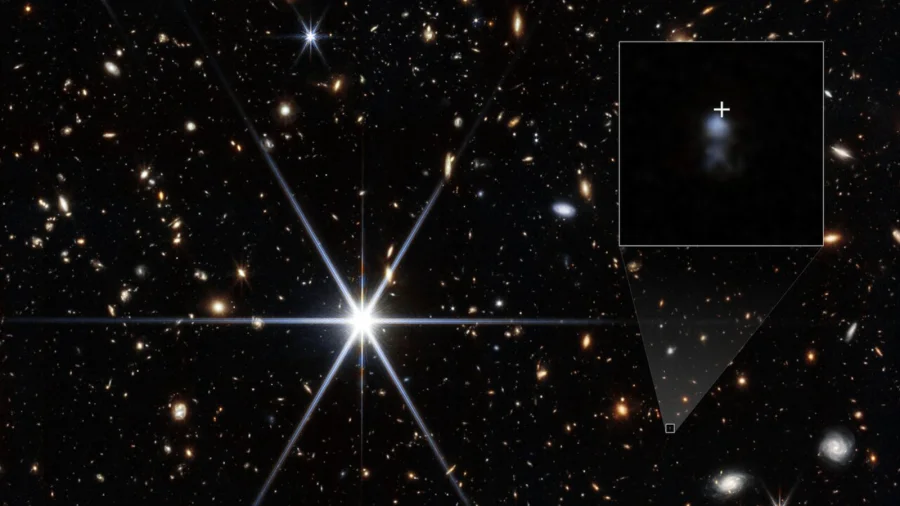

Astronomers have used the Webb telescope to find the galaxy where the farthest fast radio burst ever seen came from. This is a big step for space science because it links a mysterious burst of energy to a specific place in the universe.
A fast radio burst is a short, powerful flash of radio energy that comes from far away in space. These bursts are hard to study because they last only a moment. For years, scientists have struggled to figure out where they come from and what causes them.
Webb Telescope Pinpoints the Home Galaxy of the Farthest Fast Radio Burst
According to the original story, astronomers used the Webb telescope to see where the farthest fast radio burst we have ever seen had come from. The telescope's ability to look deep into space made this possible.
By finding the galaxy, scientists now have a location to study. This matters because the galaxy around a burst can tell researchers about the environment where the burst happened. That, in turn, can help explain what creates these flashes.
Why This Fast Radio Burst Discovery Matters for Space Science
The farthest fast radio burst ever detected is important because distance changes what scientists can learn. A burst from very far away has traveled a long way to reach us. Its signal carries information about the space it passed through.
- The Webb telescope found the galaxy behind the farthest fast radio burst on record
- The burst is the most distant one astronomers have seen so far
- Locating the galaxy gives scientists a target for follow-up study
- The finding adds to the effort to explain what causes fast radio bursts
To put it plainly, this is a case of finding the address of a cosmic signal. Once you know where something comes from, you can start asking better questions about it.
Our Take: A Small Step That Could Answer a Big Question
In our view, this news is more important than it may first appear. Fast radio bursts have puzzled scientists for years. Every time researchers trace one back to its galaxy, they get closer to understanding the source.
The fact that the Webb telescope could find the origin of the farthest fast radio burst yet is a strong sign of how powerful modern telescopes have become. It also shows that distance is no longer a wall. Astronomers can now study signals from the far edges of the universe and connect them to real places.
For readers, the takeaway is simple. Space science is moving fast. A mystery that once seemed impossible to solve is slowly being chipped away, one burst at a time. This discovery will not answer everything, but it pushes the field forward in a real way.