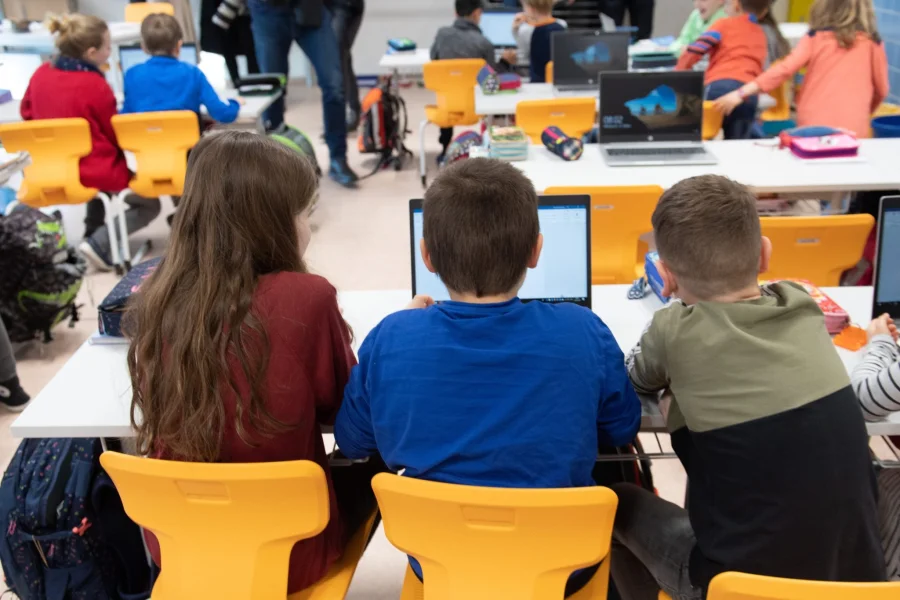

The debate over digital versus analog learning is heating up as a new school year begins. More school districts are now reconsidering the role of devices in the classroom — and the concerns go far beyond falling test scores.
Why Classroom Devices Are Being Reconsidered in Schools
Test scores in math and reading tanked after schools ditched textbooks in favor of screens. But education experts argue the damage from computers and tablets runs deeper. The problem is not just academics — it is the loss of basic human skills that children used to develop naturally in school.
According to University of Pennsylvania Graduate School of Education professor Sarah Schneider Kavanagh and University of Portland School of Education professor Katie A. Danielson, elementary school always taught more than reading and mathematics. Children learned how to wait for someone else's idea to be expressed before sharing their own, to negotiate disagreements, and to explain their thinking.
What Kids Lose When Screens Replace Face-to-Face Learning
These skills — patience, negotiation, and clear communication — are exactly what children need to be "fully human," the experts argue. In an AI-driven future, these human abilities become even more valuable, not less.
The concern is that devices isolate students. Instead of interacting with classmates and teachers, children stare at screens. They miss out on the messy, real-time social learning that happens when people talk, disagree, and work through problems together.
"Elementary school always taught more than reading and mathematics. Children learned how to wait for someone else's idea to be expressed before sharing their own, to negotiate disagreements and explain their thinking." — Sarah Schneider Kavanagh and Katie A. Danielson
The Push to Bring Analog Learning Back
As a result, school districts are starting to rethink their approach. The shift is not about rejecting technology entirely — it is about finding the right balance. Many educators now ask whether screens should replace traditional methods or simply support them.
The stakes are high. If children grow up without these interpersonal skills, they may struggle in workplaces that increasingly value collaboration and emotional intelligence — qualities that machines cannot replicate.
Our Take: The Real Cost of Screen-Based Classrooms
To put it plainly, this is a wake-up call. For years, schools rushed to put devices in every child's hands, assuming more technology meant better education. The data on test scores already challenged that assumption. Now experts are pointing to an even bigger problem: we may be raising a generation that struggles to connect with other people.
In our view, the conversation should not be about banning devices. It should be about asking what schools are for. If a classroom only produces students who can swipe and type but cannot listen, wait their turn, or explain their reasoning, then it has failed at its most basic mission.
The AI future will not need more people who can operate screens — machines will do that. It will need people who can think clearly, collaborate honestly, and treat others with respect. Those skills start in elementary school, and they start with human interaction, not screens.
Parents and educators should watch this debate closely. The decisions made now will shape not just test scores, but the kind of people our children become.