
Summary
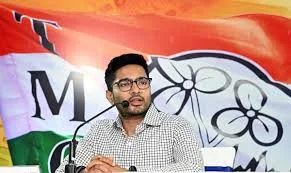
Abhishek Banerjee, a senior leader of the Trinamool Congress (TMC), has launched a strong verbal attack against the BJP and Union Home Minister Amit Shah. During a press conference in Kolkata, Banerjee dismissed the BJP’s election manifesto as a collection of empty promises. He criticized the party for focusing on illegal immigration while failing to provide jobs or ensure national security over the last ten years. Banerjee argued that the people of West Bengal are familiar with these tactics and will not be misled by new promises that mirror old, unfulfilled ones.
Main Impact
This development signals a sharpening of the political battle in West Bengal. By directly challenging Amit Shah on issues like border control and job creation, the TMC is attempting to put the central government on the defensive. Banerjee’s comments aim to shift the focus from identity politics to the actual performance of the BJP-led central government. This strategy highlights a clear divide between the TMC’s local governance model and the BJP’s vision for the state, which Banerjee claims is directed by leaders in Delhi rather than local officials.
Key Details
What Happened
At a major media event, Abhishek Banerjee held up the BJP’s "Sankalp Patra" (election manifesto) and labeled it a "jumla patra," a term used to describe empty political promises. He specifically targeted Amit Shah’s frequent use of the word "ghuspaithiye" (infiltrators) during campaign speeches. Banerjee pointed out that since the Union Home Ministry is responsible for border security, any illegal entry into the country is a failure of the central government itself. He also questioned why the BJP is promising new welfare schemes in Bengal that they previously criticized when the TMC introduced them.
Important Numbers and Facts
Banerjee highlighted several specific figures to support his arguments. He noted that the BJP has now promised to create one crore (10 million) jobs every year in West Bengal for the next five years. He compared this to the 2014 national promise of creating two crore jobs annually, asking for proof of how many jobs were actually created in Bengal. Additionally, he mentioned the BJP’s new plan to give Rs 3,000 every month to unemployed youth. Banerjee also brought up the fact that former Bangladesh Prime Minister Sheikh Hasina has been staying in India for 18 months, using this to question the government's definition of an "infiltrator."
Background and Context
The political climate in West Bengal has long been defined by a struggle between the state-level TMC and the national BJP. The BJP often uses the issue of illegal immigration from neighboring countries to gain support in border states. However, the TMC argues that the central government has the sole power to guard the borders through the Border Security Force (BSF). By bringing up security lapses, such as a past terror attack in Pahalgam that killed 26 tourists, Banerjee is trying to show that the Home Ministry has not been effective in its primary duties. This context is important because it moves the debate from state issues to national security and federal responsibility.
Public or Industry Reaction
The TMC has framed this press conference as an "explosive" revelation of the BJP's true intentions. Supporters of the TMC have shared these points widely on social media, emphasizing the idea that the BJP wants to run West Bengal via "remote control" from Delhi. On the other hand, the BJP maintains that their promises are necessary to fix what they call years of mismanagement in the state. Political observers note that the TMC is successfully using the BJP’s own manifesto to point out contradictions, especially regarding the need for unemployment stipends if job creation is expected to be so high.
What This Means Going Forward
As the election cycle continues, the focus will likely remain on these economic and security themes. The TMC will continue to push the narrative that the BJP is recycling old ideas because they have no new solutions for the state. We can expect more debates regarding the "double engine" government model, where the same party rules at both the state and central levels. The TMC will argue that this model takes away the state's independence. Meanwhile, the BJP will likely continue to focus on immigration and national identity to rally its base. The final outcome will depend on whether voters prioritize these identity issues or the economic concerns raised by Banerjee.
Final Take
The exchange between Abhishek Banerjee and the BJP leadership shows that the fight for West Bengal is about more than just local issues; it is a clash of political philosophies. By questioning the central government’s record on jobs and security, the TMC is forcing the BJP to defend its decade-long performance. The focus on simple, everyday concerns like employment and local control may resonate with voters who feel that national slogans do not always lead to local improvements. The upcoming elections will test whether the promise of a "new" Bengal under the BJP can overcome the TMC's established presence and its critique of central policies.
Frequently Asked Questions
What does "jumla" mean in Indian politics?
In Indian politics, "jumla" refers to a false promise or a statement made by a politician that is intended to sound good during an election but is not expected to be fulfilled.
Why is the Home Ministry responsible for infiltration?
The Union Home Ministry manages the country's borders and controls the Border Security Force (BSF). Therefore, any issues regarding people crossing the border illegally fall under its jurisdiction.
What is the "double engine" government mentioned by leaders?
A "double engine" government is a term used by the BJP to describe a situation where the same political party holds power in both the central government and the state government, claiming this leads to faster development.