
Summary
A major religious event in Madhya Pradesh has sparked a national debate after 11,000 liters of milk were poured into the Narmada River. The act was part of a 21-day ceremony intended to honor the river, but environmental experts are calling it a disaster for the local ecosystem. This massive dumping of organic matter has raised serious concerns about water pollution and the survival of aquatic life. As the river already faces many threats, this incident highlights the urgent need to balance religious traditions with environmental protection.
Main Impact
While milk is seen as a pure substance in many cultures, dumping it into a river in such large amounts acts like a biological poison. The main problem is that milk is full of fats, proteins, and sugars. When these enter the water, they trigger a chain reaction that strips the river of its life-sustaining oxygen. This process can kill fish and other water creatures within a matter of hours, turning a "holy" act into a deadly event for the river's inhabitants.
Key Details
What Happened
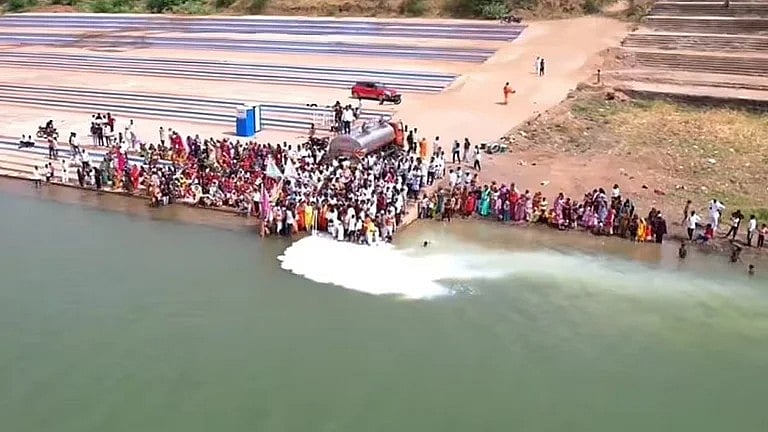
The incident took place in the Sehore district of Madhya Pradesh, about 40 kilometers from the city of Bhopal. During a long religious ceremony, tankers filled with milk were emptied directly into the Narmada River. Thousands of people attended the event, which also involved burning large amounts of ritual items and offering coconuts to the water. The area is considered sacred in Hindu tradition, which is why such large-scale rituals are often held there.
Important Numbers and Facts
The scale of the waste is significant. Approximately 11,000 liters of milk were used, which experts estimate would cost between 5.5 lakh and 7.7 lakh rupees. From a scientific perspective, this amount of milk creates a massive surge in what is called Biological Oxygen Demand (BOD). Bacteria in the water rush to eat the nutrients in the milk, and in doing so, they use up the dissolved oxygen that fish need to breathe. This creates a "dead zone" in the water where nothing can survive.
Background and Context
The Narmada River is often called the lifeline of central India. It provides water for drinking, farming, and industry for millions of people. However, the river is already in a fragile state. For years, it has suffered from illegal sand mining, the cutting down of forests along its banks, and the dumping of chemical waste from factories. Large dams have also slowed down the river's flow, making it harder for the water to clean itself naturally. Adding thousands of liters of milk to an already stressed river makes a bad situation much worse.
Public or Industry Reaction
The reaction to this event has been a mix of shock and anger. Many people on social media have pointed out the irony of wasting so much food in a country where many children suffer from hunger and malnutrition. Environmentalists have labeled the act as "criminal," comparing it to industrial pollution. They argue that if a private company dumped this much organic waste into a river, they would face heavy fines or legal action. Religious scholars have also weighed in, noting that ancient traditions were meant to be symbolic and were never intended to cause such massive waste or harm to nature.
What This Means Going Forward
This event serves as a wake-up call for how religious festivals are managed in India. There is a growing movement to encourage "eco-friendly" rituals. For example, instead of pouring thousands of liters of milk, devotees could offer a single symbolic spoonful. The rest of the milk could then be donated to orphanages or poor communities. Moving forward, there are calls for the National Green Tribunal to set stricter rules for events held near major rivers to prevent this kind of ecological damage from happening again.
Final Take
Protecting a river should be seen as the highest form of respect. When faith and science work together, traditions can be preserved without destroying the environment. The Narmada River is a living system that needs oxygen and clean water to survive. True devotion lies in keeping the river healthy for future generations, rather than performing acts that cause it harm. It is time to rethink how we express our beliefs to ensure they do not come at the cost of the planet's health.
Frequently Asked Questions
Why is milk harmful to a river?
Milk contains fats and sugars that feed bacteria. These bacteria multiply quickly and use up all the oxygen in the water, which causes fish and other aquatic life to suffocate.
Is there a religious reason for dumping so much milk?
While pouring milk is a traditional ritual, religious scholars say it was always meant to be symbolic. There is no scriptural requirement to dump thousands of liters, especially when it causes waste and pollution.
What are the social concerns regarding this event?
Many people are concerned about the waste of food. The milk used in the ceremony could have fed thousands of malnourished children, making the waste a social and ethical issue as well as an environmental one.