

Summary
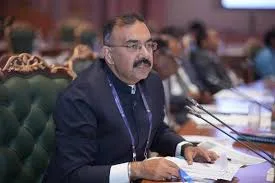
State Election Commissioner Devinder Singh Kalyan has officially announced the schedule for urban local body elections in Haryana. Residents in major cities including Panchkula, Ambala, and Sonepat will head to the polls on May 10, 2026. These elections are vital for local governance, as they determine the leadership for several municipal corporations, councils, and committees across the state. The results will be announced on May 13, following the counting of votes.
Main Impact
The announcement of the election date has immediate effects on the administration of the involved areas. The Model Code of Conduct is now in place, which means the government cannot announce new projects or transfer employees until the process ends. This period ensures a fair playing field for all candidates. For the public, these elections represent a chance to address local problems like road maintenance, waste management, and the recent banking scandals that have affected municipal funds in certain districts.
Key Details
What Happened
The State Election Commission confirmed that three major municipal corporations—Panchkula, Ambala, and Sonepat—will hold general elections. Additionally, the Rewari Municipal Council and three municipal committees, Sampla, Dharuhera, and Uklana, are part of this schedule. Beyond these urban areas, by-elections will take place for 528 vacant positions in various village-level bodies, including posts for sarpanches and zila parishad members. Voting is scheduled to run from 8 am to 6 pm on election day.
Important Numbers and Facts
The scale of these elections involves hundreds of thousands of voters. Sonepat has the largest electorate among the corporations with 2.96 lakh voters spread across 22 wards. Panchkula follows with 2.07 lakh voters in 20 wards, while Ambala has 1.98 lakh voters in 20 wards. In Rewari, 1.15 lakh people are eligible to vote across 32 wards. Smaller committees like Uklana and Sampla each have 16 wards with about 15,000 voters each.
The timeline for candidates is very tight. Official notices will be issued on April 15. Candidates must file their nomination papers between April 21 and April 25. The authorities will check these papers on April 27, and anyone wishing to withdraw their name must do so by April 28. Once the final list is ready, the commission will assign election symbols to the contestants.
Background and Context
Urban local body elections are the foundation of city management. These bodies are responsible for the daily services that residents rely on, such as water supply, street lighting, and local infrastructure. In Haryana, these elections often serve as a test of popularity for the major political parties between larger state and national elections. This year, the commission has maintained strict educational rules for candidates. To run for mayor or president, general category candidates must have finished Class 10. For women and candidates from Scheduled Castes, the requirement is Class 8. These rules aim to ensure that local leaders have a basic level of formal education to handle administrative tasks.
Public or Industry Reaction
The political atmosphere is already heating up as the two main parties, the Bharatiya Janata Party (BJP) and the Congress, prepare for a direct fight. Both parties have decided to use their official party symbols, making this a highly competitive event. Public discussion is currently focused on the rising cost of living, particularly the high price of cooking gas (LPG). In Panchkula, there is significant anger regarding financial scandals involving municipal funds. Reports of scams at Kotak Mahindra Bank and IDFC First Bank, totaling hundreds of crores, are expected to be major talking points during the campaign. Voters are looking for candidates who can promise better financial honesty and improved civic services.
What This Means Going Forward
As the campaign begins, candidates must stay within strict spending limits. A candidate for mayor can spend up to Rs 30 lakh, while ward members are limited to Rs 7.5 lakh. For village-level posts, a sarpanch can spend up to Rs 2 lakh. These limits are designed to prevent wealthy candidates from having an unfair advantage. Voters will also have the "None of the Above" (NOTA) option on their ballots if they do not support any of the listed candidates. If any voting booths experience trouble or technical issues, the commission has reserved May 12 for re-polling to ensure every vote is counted fairly.
Final Take
The upcoming May 10 elections will be a defining moment for local governance in Haryana. With clear rules on education and spending, the focus now shifts to the candidates and their ability to address the real-world concerns of the people. Whether it is fixing local roads or investigating financial mismanagement, the winners will face the immediate task of rebuilding public trust in local institutions.
Frequently Asked Questions
When will the voting and results take place?
Voting is scheduled for May 10, 2026, from 8 am to 6 pm. The counting of votes and the declaration of results for the municipal bodies will happen on May 13, 2026.
What are the educational requirements for candidates?
Candidates from the general and backward classes running for mayor or president must have passed Class 10. Women and Scheduled Caste candidates must have passed at least Class 8.
Which cities are included in the municipal corporation polls?
The three municipal corporations holding general elections are Panchkula, Ambala, and Sonepat. Elections are also being held for the Rewari Municipal Council and several smaller committees.