

Summary
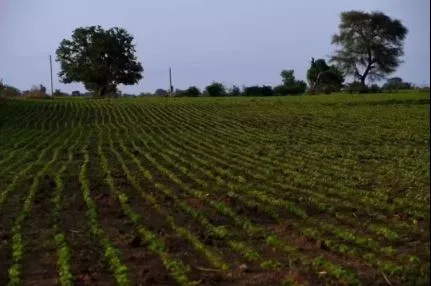
The Haryana government has announced a major plan to expand natural farming across the state. For the 2026-27 season, the Agriculture and Farmers Welfare Department aims to bring 100,000 acres of land under natural cultivation. This initiative is designed to improve soil health, protect water resources, and provide healthier food for the public. By setting specific goals for every district, the state hopes to make eco-friendly farming a standard practice for local growers.
Main Impact
This move represents a significant shift in how food is grown in Haryana. By moving away from chemical-heavy methods, the state is addressing long-term environmental concerns. The primary impact will be the reduction of harmful pesticides and synthetic fertilizers in the food chain. Additionally, the government is setting up a support system to ensure farmers do not face this transition alone. This includes training programs and a new "cluster system" to help farmers manage their crops and sell their produce more effectively.
Key Details
What Happened
The Director General of the Agriculture and Farmers Welfare Department has issued official orders to all district leaders. These orders outline exactly how much land in each area must be converted to natural farming by 2027. To prove that these methods work, the state will also set up demonstration plots on 5,000 acres. These plots will serve as living examples for other farmers to see the results of chemical-free agriculture firsthand.
Important Numbers and Facts
The state has divided the 100,000-acre goal among different districts based on their size and farming capacity. Kurukshetra has been given the largest task, with a target of 10,000 acres. Sirsa follows with 7,000 acres. Several other major farming areas, including Hisar, Jind, Kaithal, Karnal, Sonepat, and Yamunanagar, each have a target of 6,000 acres.
Other regions have also been assigned specific goals:
- Fatehabad, Panchkula, and Rohtak: 5,000 acres each.
- Bhiwani and Jhajjar: 4,000 acres each.
- Ambala, Charkhi Dadri, Mahendergarh, Nuh, Palwal, Panipat, and Rewari: 3,000 acres each.
- Faridabad and Gurugram: 1,500 acres each.
Background and Context
Natural farming is a method of growing crops without using synthetic chemicals, such as man-made fertilizers or bug sprays. Instead, it relies on natural processes and organic materials. For many years, farming has relied heavily on chemicals to increase crop yields. However, this has led to serious problems. The soil is losing its natural nutrients, and the underground water that people drink is becoming polluted. Experts believe that if farming does not change soon, the land may become too damaged to grow food in the future. Haryana is taking these steps now to prevent a food and water crisis later.
Public or Industry Reaction
Government officials and agricultural experts are showing strong support for the plan. Agriculture Minister Shyam Singh Rana recently met with Gujarat Governor Acharya Devvrat to discuss the best ways to implement these changes. Governor Devvrat has been a long-time supporter of natural farming and believes it is the only way to protect the health of future generations. Local agriculture officers, such as Dr. Jasvinder Singh from Ambala, noted that many "progressive farmers" are already excited about the change and are ready to adopt these new methods.
What This Means Going Forward
To make this plan work, Haryana is adopting a "cluster system" similar to one used in Gujarat. The state will group farmers into clusters of about 150 people. Each group will be assigned a government official to provide scientific and practical advice. Furthermore, selected farmers will be trained as "Master Trainers." These experts will go into villages to teach their neighbors how to farm naturally. The government also plans to create a better way for farmers to sell their natural crops, ensuring they get a fair price for their hard work. Training for officials will take place at the Natural Farming Training Centre in Kurukshetra to ensure everyone is prepared for the 2026-27 season.
Final Take
Haryana is taking a bold step toward a greener future by setting clear, measurable goals for natural farming. This plan is not just about changing how crops are grown; it is about protecting the basic resources like water and soil that everyone depends on. By providing training and a structured support system, the state is giving farmers the tools they need to succeed without relying on expensive and harmful chemicals. This transition could lead to a healthier environment and a more sustainable food supply for the entire region.
Frequently Asked Questions
What is the main goal of Haryana's new farming plan?
The main goal is to bring 100,000 acres of land under natural farming by the year 2026-27 to improve soil health and food safety.
How will farmers learn how to use natural farming methods?
Farmers will be supported by a cluster system where government officials and "Master Trainers" provide hands-on training and scientific guidance in every village.
Which district in Haryana has the highest target for natural farming?
Kurukshetra has been given the highest target, with a goal of 10,000 acres dedicated to natural farming practices.