

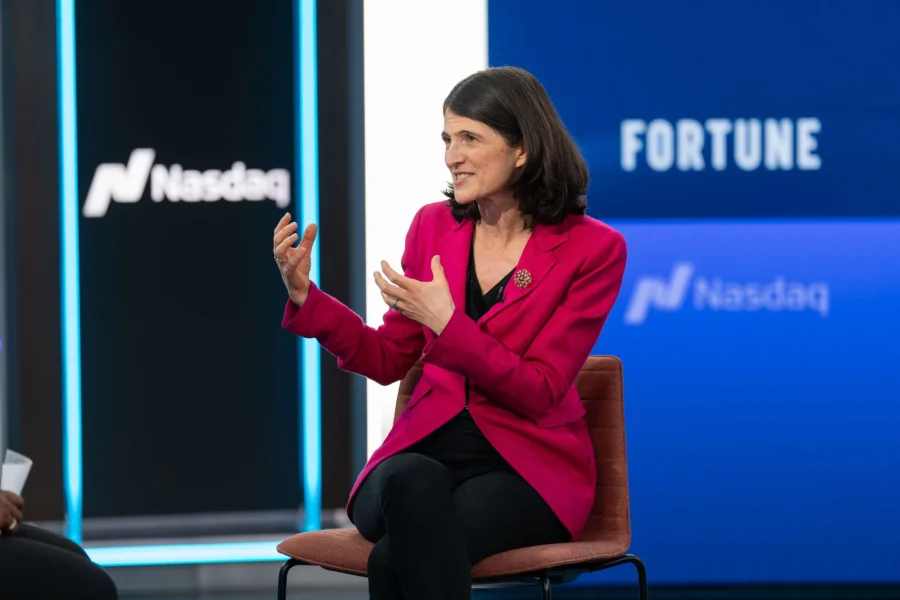

Nasdaq CFO Sarah Youngwood has introduced an unusual way to measure AI skills in her finance team — a belt ranking system similar to martial arts. Employees now earn belts for AI proficiency, starting with white belts for basic knowledge and advancing through levels that require practical delivery and teaching others.
According to Fortune, Youngwood has mandated that everyone on the finance team must reach at least white belt level. Her long-term goal is for 20% of the team to reach black belt status.
How the AI Belt System Works
The belt system is one way Youngwood is putting her AI strategy into action. White belts represent foundational knowledge of artificial intelligence. As employees move up the ranks, they must show they can deliver AI projects and teach others. Black belt status requires both hands-on delivery and the ability to train colleagues.
Youngwood calls this approach an "embedded capability" — meaning AI is not a separate project but something that should be part of everything Nasdaq does. In her view, AI should reshape market infrastructure, internal finance operations, and workforce culture.
"If we are Nasdaq, it is o..." — Fortune
Why This Matters for Finance Teams
Youngwood's playbook shows how a major company like Nasdaq is treating AI as a core skill, not an optional extra. By making AI proficiency a requirement for everyone in finance, she is signaling that understanding and using AI is now as basic as knowing how to use a spreadsheet.
The belt system also creates a clear path for employees to develop their skills. Instead of vague expectations, staff know exactly what level they need to reach and what it takes to advance.
Our Take: A Practical Model for AI Adoption
Youngwood's approach is smart because it makes AI everyone's job, not just a specialist's. By setting a minimum standard (white belt) and a clear goal (20% black belt), she creates accountability without being unrealistic. The martial arts analogy also makes the learning process feel achievable — everyone starts at the same level and works their way up.
For other CFOs and business leaders, this playbook offers a template. Instead of talking about AI in abstract terms, Youngwood has turned it into a measurable, mandatory skill. That is the kind of concrete action that actually drives change in large organizations.