
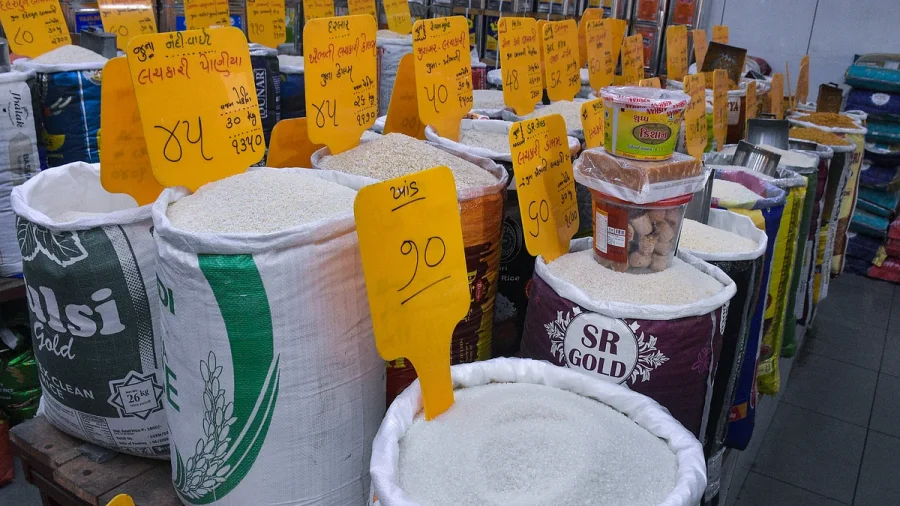

The government has tightened sugar stock limits for dealers across the country, cutting the maximum allowed quantity by half. The new limit is 2,000 quintals, down from the earlier 4,000 quintals. The move is designed to stop hoarding and speculative trading as the festive season approaches.
New Sugar Stock Rules for Dealers
The revised limit will come into effect from 15 September and will stay in force until 30 November 2026, according to the Ministry of Consumer Affairs, Food and Public Distribution. Under the updated rules, dealers cannot hold sugar for more than 30 days from the date they receive it. At no point and at no location across the country can a dealer stock more than 2,000 quintals of sugar.
This means every dealer in the country must now follow the same strict ceiling, regardless of where they operate. The government has set this uniform cap to ensure sugar supplies remain steady and prices stay stable during the festive period, when demand typically rises.
Kolkata Exception to Sugar Stock Limit
There is one notable exception to the new rule. The existing 4,000-quintal limit will continue to apply to dealers in Kolkata and its extended metropolitan areas. The government has made this allowance taking into account the region's specific supply needs and distribution patterns.
This exception means dealers in Kolkata will not face the same reduction as the rest of the country. The decision reflects the government's effort to balance nationwide anti-hoarding measures with local realities.
Why the Government Cut Sugar Stock Limits
The primary goal of this change is to prevent hoarding and speculative trading. By reducing the amount of sugar a dealer can hold, the government aims to keep more stock in the open market. This should help maintain adequate supply and prevent artificial price hikes during the festive season, when consumer demand for sugar and sweets increases.
The 30-day holding rule adds another layer of control. Dealers must move their sugar within a month of receiving it, which discourages them from sitting on large inventories for long periods. Together, these measures are meant to keep the market fluid and discourage any attempt to create artificial shortages.
Our Take: A Firm Step to Protect Consumers
In our view, this is a sensible and timely move by the government. Festive seasons often see a spike in demand, and that is exactly when some dealers try to profit by holding back stock. Cutting the limit in half sends a clear signal that such practices will not be tolerated.
The Kolkata exception is also a practical decision. It shows the government is not applying a one-size-fits-all rule blindly, but is considering regional supply conditions. That kind of flexibility is important in a country as diverse as India.
For consumers, this should mean better availability of sugar at fair prices during the festive months. For dealers, the message is simple: follow the rules or face the consequences. We believe this measure will help keep the market stable, but its success will depend on strict enforcement across all states.