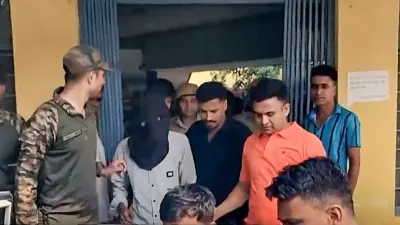



A local court in Bhopal has extended the judicial custody of Samarth Singh and his mother Giribala Singh till July 28 in connection with the death case of former model-turned-actor Twisha Sharma. The extension came after the Central Bureau of Investigation (CBI) told the court that the accused were not cooperating with the collection of their voice samples, which investigators consider crucial to the probe.
Court Hearing and Custody Extension
The mother-son duo appeared before the Bhopal District and Sessions Court through video conference during the hearing. After hearing arguments from both sides, the court granted the CBI’s request to extend their custody by 14 days.
According to Deccan Herald, the CBI alleged that the accused were not cooperating in providing voice samples, which led to the extension of their judicial custody.
CBI’s Allegations of Non-Cooperation
The CBI has been investigating the death of Twisha Sharma, who was found dead at her in-laws’ residence in Bhopal on May 12. Her husband, Samarth Singh, and mother-in-law, Giribala Singh, a former district judge, were later arrested on allegations related to her death.
As reported by NDTV, the CBI told the court that the mother-son duo did not cooperate with the process of providing voice samples, which are seen as important evidence in the case.
Background of the Case
Twisha Sharma, a former model and actor, was found dead at her in-laws’ home in Bhopal. The case has drawn significant attention due to the involvement of a former district judge as an accused. The investigation was taken over by the CBI, which is now leading the probe into the circumstances surrounding her death.
The court’s decision to extend custody reflects the ongoing challenges in the investigation, particularly regarding the collection of forensic evidence like voice samples.
Our Take: Cooperation is Key to Justice
In our view, the extension of judicial custody in this case is a clear signal from the court that non-cooperation with investigators will not be tolerated. The CBI’s request for voice samples is a standard part of forensic investigation, and refusing to provide them only raises more questions. For justice to be served in the Twisha Sharma case, all parties must cooperate fully with the legal process. The court’s firm stance is a step in the right direction to ensure that the truth comes out.