

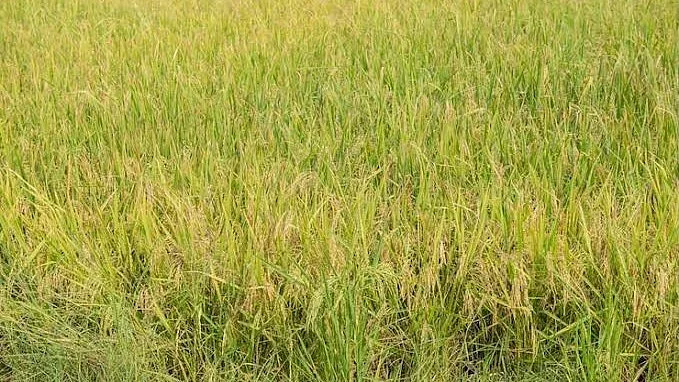

Paddy farmers in Chenbagaramanputhoor village of Thovalai taluk in Tamil Nadu's Kanyakumari district are facing a serious problem. Wild rice weed is spreading across large parts of their farmland, and they say it is driving up the cost of cultivation. Farmers have now urged the state government and the agriculture department to act quickly before the weed moves into fields that are still unaffected.
Wild rice weed infestation in Kanyakumari paddy fields
The weed has spread across nearly 150 acres of the 500-acre cultivated area in the village, according to New Kerala. Farmers first noticed the weed about four years ago. The problem is that wild rice closely mimics cultivated paddy, which makes it hard to identify and remove. This means farmers have to spend extra money on labour to deal with it.
Chenbagaramanputhoor is an important paddy-growing belt. Fields stretch along both sides of the village's main road, and much of the land gets its water from the Thovalai channel. During the ongoing Kanni Poo paddy season, farmers have raised varieties including Ambai-16, TPS-5, and Amba.
Farmers demand government intervention and field inspections
The Chenbagaramanputhoor Farmers Association has formally appealed to the government to step in before the problem gets worse. According to National Herald India, farmers have asked for field-level inspections by agriculture officials, identification of the source of the infestation, and scientific advice on effective control measures.
"The Chenbagaramanputhoor Farmers Association has therefore appealed to the government to intervene before the problem gains a stronger foothold." — National Herald India
The urgency is clear. If the weed is not contained, it could spill into unaffected fields and cast a wider shadow over paddy cultivation across the region. Farmers want the government to act now, not later.
Rising cultivation costs threaten future paddy crops
The infestation is not just about damaged fields — it is about money. Farmers are spending more on labour because the weed is difficult to spot and remove. The extra work drives up cultivation costs, which cuts into their earnings. As reported by National Herald on X, the spread of wild rice is raising cultivation costs and threatening future crops in the region.
- Wild rice weed mimics cultivated paddy, making identification difficult
- Extra labour is required to remove the weed, increasing farming costs
- Farmers want the source of infestation identified by officials
- Scientific advice on control measures has been requested
Our Take: Government must respond fast to protect Kanyakumari farmers
To put it plainly, this is a problem that will not solve itself. Wild rice weed has been spreading for four years, and it has already covered nearly a third of the cultivated area in Chenbagaramanputhoor. Every season that passes without action means more fields affected and more money lost by farmers who can least afford it.
The farmers are not asking for something unreasonable. They want inspections, answers about where the weed came from, and practical advice on how to control it. These are basic services that the agriculture department should provide. In our view, the state government should treat this as a priority. Delays will only make the problem bigger and the solution more expensive. The farmers of Kanyakumari have done their part by raising the alarm — now it is time for the government to respond.