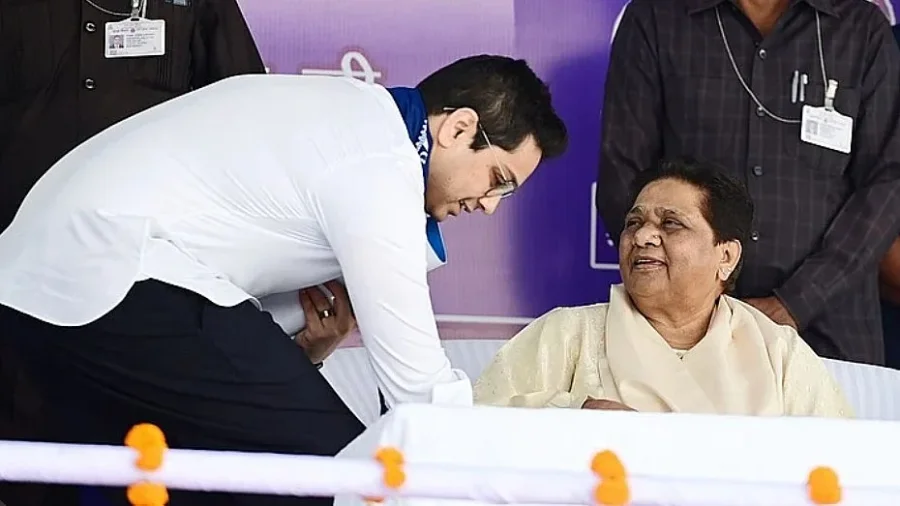

Mayawati has once again put her trust in her nephew Akash Anand. The Bahujan Samaj Party (BSP) chief has reinstated him as a key campaigner and handed him a series of rallies across Uttar Pradesh, Punjab and Uttarakhand. The move comes after she had repeatedly sidelined him and then brought him back.
The party is framing this as a push to keep its traditional Bahujan support base while reaching out to younger voters, especially Generation Z. The BSP is worried about its declining political representation, and Anand is being positioned as the face that can connect with young people.
Why Mayawati Is Backing Akash Anand for Gen Z Outreach
In a post on X on Sunday, Mayawati praised Anand's political work. That public endorsement matters because it signals that, for now, he is back at the center of the party's campaign plans.
The calculation behind the move is simple. The BSP's core support has aged, and the party needs fresh faces to stay relevant with first-time and young voters. Anand, who has been part of the party's outreach before, is being used to bridge that gap.
To put it plainly, this is a party trying to hold what it has while borrowing appeal from a younger generation. The rallies in three states are meant to test whether that formula works on the ground.
The Chandrashekhar Azad Challenge for BSP's Young Voter Base
The BSP's young-voter push is not happening in a vacuum. Chandrashekhar Azad's growing appeal among young voters is seen as a direct challenge for the party. Azad has been drawing attention from the same demographic that the BSP wants to win back.
This makes Anand's role more than symbolic. If the BSP cannot offer young Bahujan voters a credible young leader, they may look elsewhere. The party's repeated U-turns on Anand also raise a question in voters' minds about how stable his position really is.
- Anand has been sidelined and reinstated more than once — a pattern that has played out publicly.
- His new assignment covers rallies in Uttar Pradesh, Punjab and Uttarakhand.
- The party's stated aim is to retain Bahujan support while attracting Gen Z voters.
- Chandrashekhar Azad's rising pull among young voters is the backdrop to this decision.
Our Take: A Familiar Bet With an Uncertain Outcome
In our view, Mayawati's decision to bring Akash Anand back is less about a long-term plan and more about a party trying to stop the drift of young voters. The BSP knows its old support base alone will not carry it forward. It needs new energy, and Anand is the option it keeps returning to.
The problem is the repeated U-turns. Every time Anand is sidelined and then reinstated, it sends a mixed signal to the very young voters the party wants to attract. Young people notice inconsistency. If the party cannot decide how much it trusts its own campaigner, why should first-time voters trust the party?
What readers should watch is whether these rallies in three states turn into a real youth outreach or remain a short-term fix. If the BSP uses Anand seriously and gives him space to build a connect with Gen Z, this bet could pay off. If it is another temporary arrangement, the party risks losing more ground to rivals like Chandrashekhar Azad who are already speaking the language young voters respond to.
The BSP's future depends on whether it can turn this reinstatement into a steady strategy — not another U-turn.